Local Spotlight

AC Repair: Stuart vs. Fort Pierce vs. Port St. Lucie

By The Kyzar Team · May 13, 2026
Listen to this article --:--

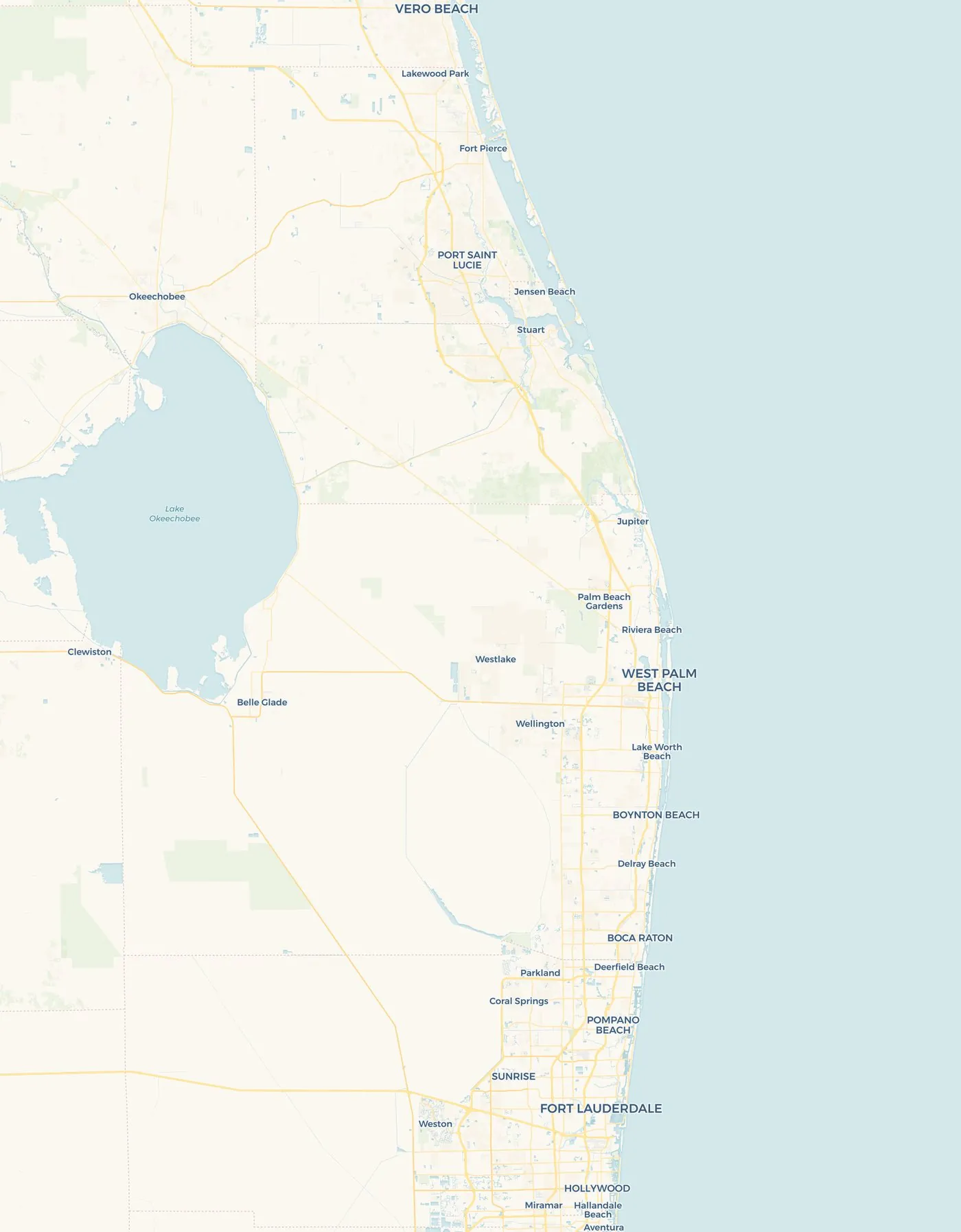
If you've lived on the Treasure Coast for a while, you've probably noticed it: the AC company that does great work in Port St. Lucie isn't always the right call for Stuart, and the techs who know Fort Pierce inside out sometimes struggle in St. Lucie West. The three cities look similar on a map, but each has its own housing stock, its own micro-climate, and its own quirks that show up on the service ticket.

We work all three markets out of our Port St. Lucie office, and after enough service calls you start to see patterns. This is the article that explains the differences — for homeowners trying to figure out who to call, what to budget, and what's normal in their specific town.

Quick Snapshot

  • Typical home age — Port St. Lucie: 2003-2020 master-planned · Stuart: 1970s-2010 mix · Fort Pierce: 1960s-2000s older stock
  • Coastal exposure — Port St. Lucie: Mostly inland (3-7 mi) · Stuart: Mixed inland + coastal · Fort Pierce: Direct Atlantic + lagoon
  • System lifespan — Port St. Lucie: 12-14 years · Stuart: 9-13 years · Fort Pierce: 7-11 years (coastal)
  • Common system size — Port St. Lucie: 3-5 ton · Stuart: 2.5-4 ton · Fort Pierce: 2-3.5 ton
  • Refrigerant typical — Port St. Lucie: R-410A, transitioning to R-454B · Stuart: Mix of R-22, R-410A · Fort Pierce: R-22 still common on older units
  • Most common repair — Port St. Lucie: Capacitor / contactor · Stuart: Refrigerant leaks · Fort Pierce: Coil corrosion

These aren't hard rules — every home is different — but the patterns hold across thousands of service calls.

Port St. Lucie: Master-Planned, Mostly Inland, Mostly Predictable

Port St. Lucie is the youngest of the three from an HVAC standpoint. Most of the housing stock is post-2000 master-planned development — Tradition, St. Lucie West, Riverland, Verano. The systems installed in those neighborhoods are largely R-410A units from the 2005-2020 era, which means they're approaching or already in the replacement-decision window.

What that means in practice:

  • Most calls are routine. Capacitors, contactors, the occasional thermostat. Repair-first is usually the right answer for systems under 12 years old.
  • Ductwork is generally in good shape. Master-planned construction means modern duct design, R-8 insulation, and reasonable register placement. We rarely need to chase a duct failure on a 2010+ PSL home.
  • System sizing is usually correct. Builders did Manual J calculations on most of these homes. Oversizing is less of an issue than in older inland Florida.
  • The 8-12 year decision window is hitting now. Lots of 2014-2018 systems in St. Lucie West and Tradition are right at that "do we repair or replace" sweet spot.

The watch-out: gated communities (Valencia Cay at Riverland, PGA Village, Castle Pines) have HOA rules about service vehicle hours, noise, and exterior unit placement. A tech who hasn't worked in those communities can lose 30 minutes at the guard gate. Ask your contractor whether they regularly work your specific community before scheduling.

Stuart: Older Housing, Mixed Coastal Exposure, More Variance

Stuart has a much wider range of housing stock — 1970s ranch homes east of US-1, 1990s-2000s subdivisions in Palm City and Jensen Beach, plus the wealthy coastal stretch on Sewall's Point and Hutchinson Island. The result is that "the average Stuart HVAC call" doesn't really exist. There are several different submarkets:

Older Stuart (east of US-1, pre-1990 homes)

  • Systems are often R-410A retrofits of original R-22 setups — the outdoor unit was replaced 10-15 years ago but the air handler and ductwork are still the originals.
  • Mismatched system efficiency is common. The 16 SEER condenser is doing 12 SEER work because of the legacy air handler.
  • Ductwork is often undersized for modern AC loads — those 1970s ducts were designed for smaller equipment.
  • The right answer is sometimes a full system replacement with new ductwork. Don't be surprised if a real diagnostic recommends it.

Palm City and inland Stuart

  • More like Port St. Lucie — newer builds, predictable systems. Most repairs are routine.

Coastal Stuart (Sewall's Point, Hutchinson Island, North Stuart oceanfront)

  • This is where corrosion runs the show. See our salt-air corrosion article for the full breakdown.
  • Sea-coast coil upgrades are almost mandatory at replacement.
  • Annual coil washes are not optional.

The Stuart pattern overall: budget more for diagnostic time. A tech walking into a Stuart home doesn't know which submarket they're in until they see the equipment. Good contractors charge for thorough diagnostic on first visits in Stuart for exactly this reason.

Fort Pierce: Older, Coastal, and Salt-Heavy

Fort Pierce is the most challenging of the three for HVAC. Three big reasons:

1. The housing stock is older

A lot of Fort Pierce homes are 1960s-1980s CBS (concrete block) construction. The original systems were R-22, often single-stage, often undersized by modern standards. Many of these homes have had multiple AC replacements over the decades — and not all of them well-done.

2. The coastal exposure is more intense

Fort Pierce sits right on the Indian River Lagoon and the Atlantic. The salt air is more aggressive here than in much of Stuart, and significantly more than inland PSL. Standard condenser lifespans of 7-10 years are common in Fort Pierce.

3. R-22 is still in play

A genuinely surprising number of Fort Pierce homes still have R-22 systems running. They're 15+ years old, the refrigerant is hard to find and expensive ($150+/lb when you can get it), and every leak repair is a forced replacement conversation. If your Fort Pierce home still has an R-22 system, it's worth getting a replacement quote before it dies, not after.

What this means for Fort Pierce homeowners:

  • Replace earlier than the math says you should. A 9-year-old coastal Fort Pierce system might still work, but it's running on borrowed time.
  • Always spec the sea-coast coil upgrade on new installs east of US-1.
  • Annual maintenance is a real ROI — not a nice-to-have. Catching corrosion at year 4 instead of year 8 changes the lifespan.

Pricing: Are the Three Cities Really Different?

In terms of actual repair/replacement pricing, the three cities are within 5-8% of each other. Where they diverge is in what gets recommended:

  • A "leaking refrigerant" call in PSL on a 6-year-old R-410A system is usually a $500-$1,200 leak repair.
  • The same call in Fort Pierce on an R-22 system is a forced replacement conversation.
  • The same call in coastal Stuart on a 9-year-old standard-coil unit is "let's talk about replacement or a $1,800 coil swap plus a sea-coast upgrade."

The cities aren't pricing differently. The systems being installed and the conditions they're operating in dictate different conversations.

What to Look For in a Treasure Coast HVAC Contractor

Across all three markets:

  1. Local office, not "we service the area." Real local presence means same-day dispatch instead of "we can be there Tuesday." Travel time matters when the heat index is 105.
  2. Understands all three markets. A contractor who only really knows one of the three (often PSL master-planned communities only) will under-diagnose Stuart and Fort Pierce.
  3. Will give you written quotes, not verbal. Treasure Coast is a high-trust market — and the established players have learned to put everything in writing.
  4. Covers sea-coast installs. Even if you're in inland PSL, your contractor should be conversant in coastal-grade equipment because relatives, in-laws, and rental properties often are coastal.
  5. Honest about repair-vs-replace. Especially in Fort Pierce, where the R-22 conversations should happen before the system dies — not as a surprise on a hot Friday.

Frequently Asked Questions

Are AC repair costs different in Stuart vs. Port St. Lucie?

Pricing for the same repair is within 5-8% across the Treasure Coast. The bigger difference is what kind of repairs are common: PSL sees mostly capacitor and contactor work, Stuart sees more refrigerant leaks (older systems), and Fort Pierce sees more corrosion and R-22 issues.

How long should an AC unit last in Stuart vs. Fort Pierce vs. Port St. Lucie?

Inland Port St. Lucie homes typically get 12-14 years out of an AC system. Mixed-exposure Stuart homes average 9-13 years. Coastal Fort Pierce and coastal Stuart often see 7-10 years on standard-coil units. Sea-coast-rated coils extend the coastal numbers by 3-5 years.

Do I need a sea-coast AC unit in Port St. Lucie?

If you're in Tradition, St. Lucie West, or anywhere more than 3 miles inland — no, it's optional and often not worth the upcharge. If you're east of US-1, on Hutchinson Island, or anywhere with regular onshore wind — yes, the sea-coast upgrade is worth the $400-$900 premium.

Why do Fort Pierce AC systems fail earlier than Port St. Lucie systems?

Two reasons: older housing stock (more original/legacy installs) and direct Atlantic + Indian River Lagoon exposure (salt air is more aggressive). The combination means standard condenser lifespans in coastal Fort Pierce are typically 4-5 years shorter than in inland PSL.

Is R-22 still used in Fort Pierce homes?

Yes — a surprising number of Fort Pierce homes still run R-22 systems despite the 2020 phase-out. Refrigerant is $150+ per pound and getting scarcer. If your system is R-22, plan for replacement on your timeline rather than as an emergency.

Are Treasure Coast HVAC contractors more expensive than national chains?

Not generally. Local Treasure Coast contractors are usually within 10% of national chain pricing on common repairs, and often significantly cheaper on replacement quotes (because they don't carry the same overhead). Where they win is response time, local knowledge, and the ability to read a Stuart 1970s home vs. a PSL master-planned home correctly on the first visit.

Do I need a Stuart-specific HVAC contractor for a Stuart home?

You need a contractor who works Stuart regularly. The submarkets within Stuart (older east-of-US-1, Palm City, coastal Sewall's Point) require very different approaches. A tech who mostly works PSL master-planned subdivisions won't always make the right call on a 1972 Stuart ranch.

The Bottom Line for Treasure Coast Homeowners

Three cities, three different HVAC realities:

  • Port St. Lucie: newer, predictable, mostly inland — repair-first is usually right.
  • Stuart: varied housing stock, more diagnostic work needed, coastal pockets need real attention.
  • Fort Pierce: older systems, aggressive salt exposure, replace earlier than the math says.

Whichever city you're in, the right contractor is the one who knows the difference — and who has a local office close enough to be there same-day.

If you'd like a free in-person diagnostic anywhere from Sebastian down to Stuart and out to Hutchinson Island, call (561) 951-7088 or book online. We dispatch from our Port St. Lucie office, work all three markets every week, and never sell new units to people who don't need them.

Kyzar Air Conditioning's Port St. Lucie team serves the entire Treasure Coast — [Port St. Lucie](/service-areas/port-st-lucie/), [Stuart](/service-areas/stuart/), [Fort Pierce](/service-areas/fort-pierce/), Jensen Beach, Palm City, Sebastian, and the Hutchinson Island coast. Same-day dispatch. Honest repair-vs-replace conversations. Industry-leading [15-year warranties](/warranty/) on new installs.