We're available. Give us a call.(561) 640-1000
Need AC repair in Port St. Lucie, FL? The July problem here is moisture, not salt, and a system that cannot pull it leaves a house clammy. Someone real takes the call day or night, never voicemail, and our Tradition office puts a truck minutes away.
Book your same-day visit & get $50 off any service.
0% interest financing for 60 months
Locally owned, not private equity
Lifetime warranty
Same-day service, next-day installs
 NATE-Certified TechniciansCertified experts in installation & diagnostics
 Lennox Premier DealerLennox's top tier for install quality
 Lennox Centurion AwardTop Lennox dealers in North America
 York Certified Comfort ExpertFactory-trained on York systems
 HomeAdvisor Top RatedScreened & approved by homeowners
 BBB Accredited, A+Accountable, transparent service
 Florida Licensed & InsuredLic. CAC1822395, permits always pulled
Why choose us
An inland city with no sea breeze asks every system to pull heavy humidity out of the air for weeks straight. That sticky feeling at a normal thermostat reading is a symptom, not a mystery. The city also splits by age: older eastern sections around Sandpiper Bay run equipment reaching end of life together, while Tradition and Southern Grove live or die on install quality.
Our second office sits right in Tradition, so we cover this city the way a local shop should. Same day in most cases when a system quits on a Friday afternoon, our own uniformed techs rather than subcontractors, and the same honest process we run everywhere: diagnose first, quote the repair at any age.
A background-checked, NATE-certified tech in uniform and booties, with the price in writing before anything is touched. Newer construction is exactly where install quality shows, so any replacement estimate is free and includes a full ductwork evaluation. Permits pulled, copper drip pans, and installs done to manufacturer spec, which is where 65% to 75% of installs nationally fall short.
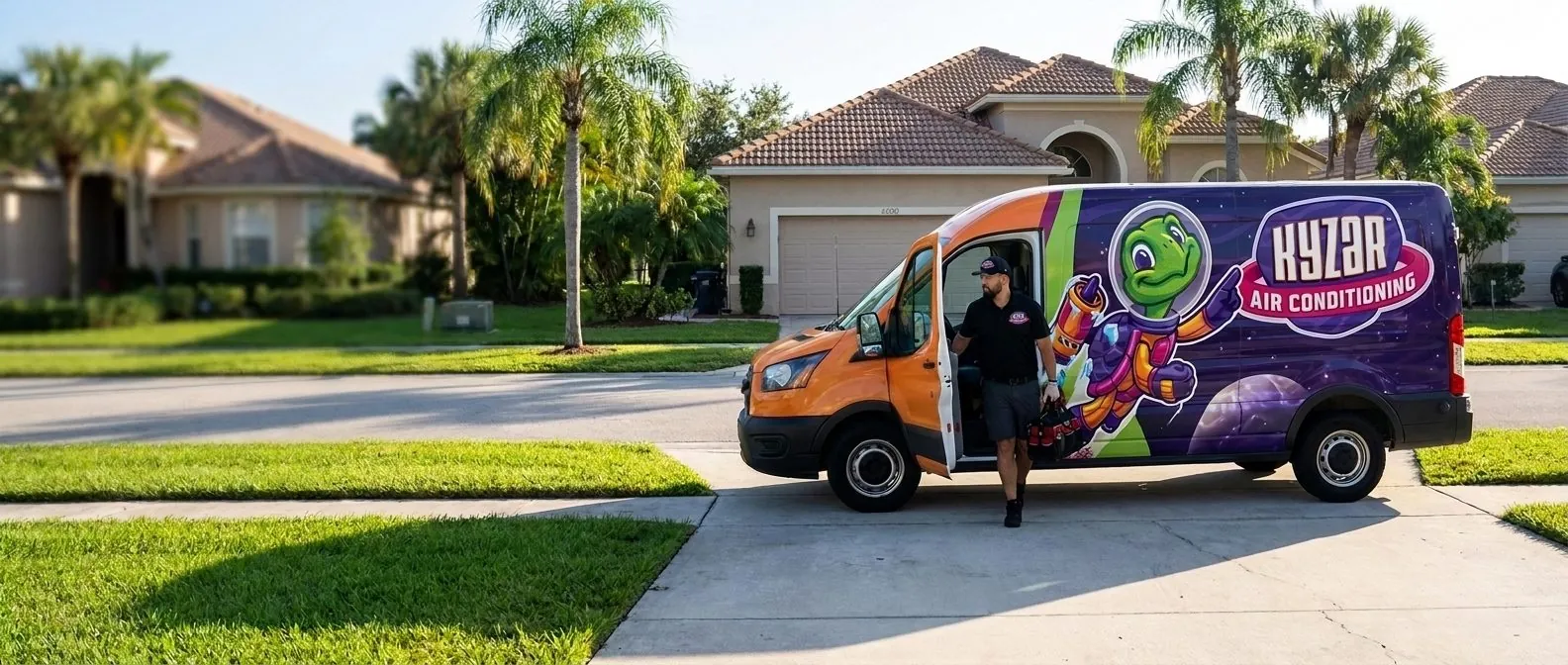
47 trucks, dispatched daily
Neighborhoods we work
Not on the list? We cover all of Port St. Lucie and most of St. Lucie County. Give us a call and we'll tell you straight.
Our services

Blowing but not cold? Thermostat set to 72 but the house sits at 76? Won't turn on? Water on the ceiling? We diagnose the real fault first, then fix it today in most cases.
Fix my AC →

Free estimate including a full ductwork evaluation, installed to manufacturer spec, backed by a lifetime warranty on qualifying systems.
Get a free estimate →

Catch the $80 problem before it becomes the $8,000 one. Twice-yearly plans, and coastal intervals if you're near the water.
Book a tune-up →

Book a diagnostic. We find the actual problem before anybody talks price, and the fee comes off your repair.
Book a diagnostic →
Also in our wheelhouse:Indoor Air QualityDuct CleaningMini SplitsCommercial A/C
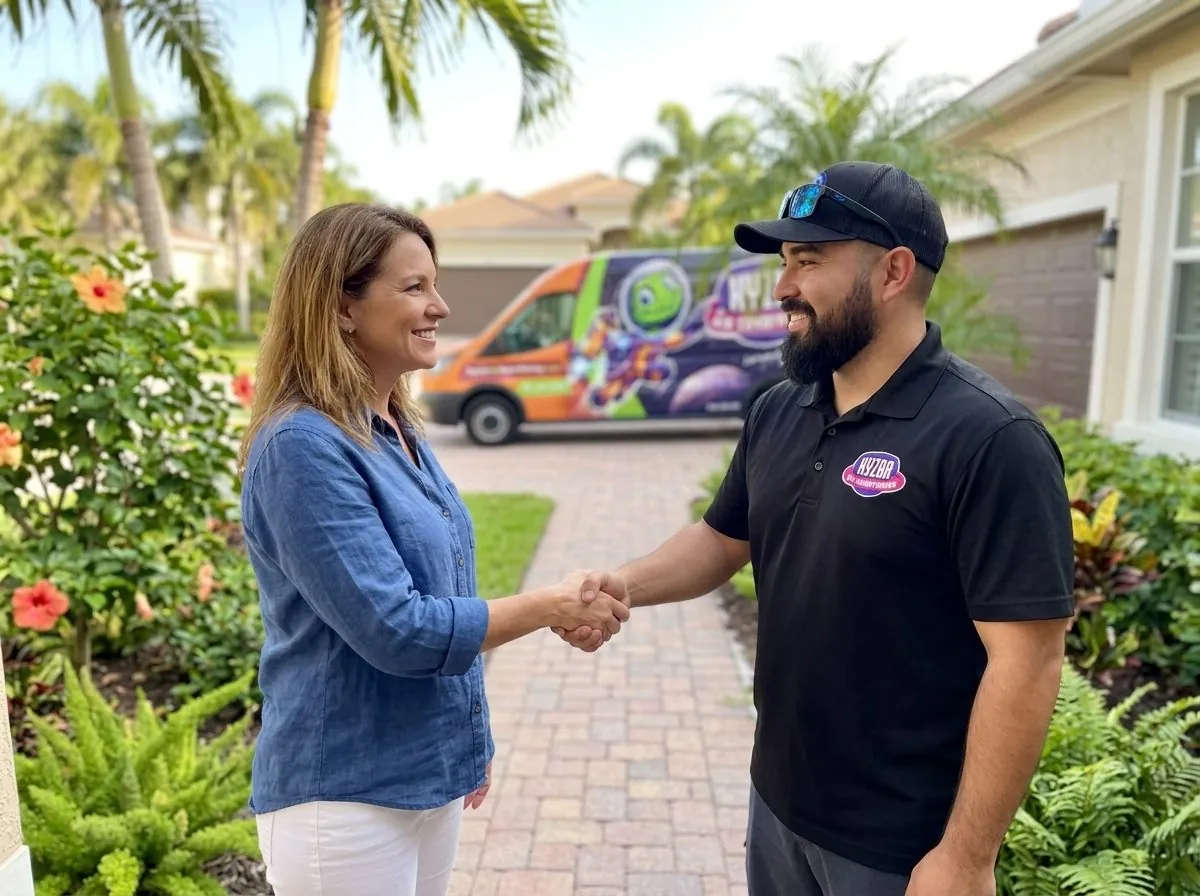
Background-checked, drug-tested, NATE-certified. Uniformed, in booties, on a branded truck. Never a subcontractor.
How it goes
Five steps, in this order, every time. The rail beside them cools as the visit does: orange when your house is hot, ice blue when we leave.
Day or night, seven days a week. Form leads get a callback in about three minutes. We tell you honestly when we can be in Port St. Lucie.
A NATE-certified tech finds the actual failure. Not a guess from the driveway, and not a replacement pitch.
Always a repair quote, at any system age. If replacement makes more sense, you get both numbers and you choose.
On every replacement quote. Roughly 85% of homes built for R-22 are ducted wrong for a modern system, and nobody tells homeowners that.
Copper drip pans, manufacturer spec, permit on file. That's what keeps a lifetime warranty real instead of decorative.
What you get
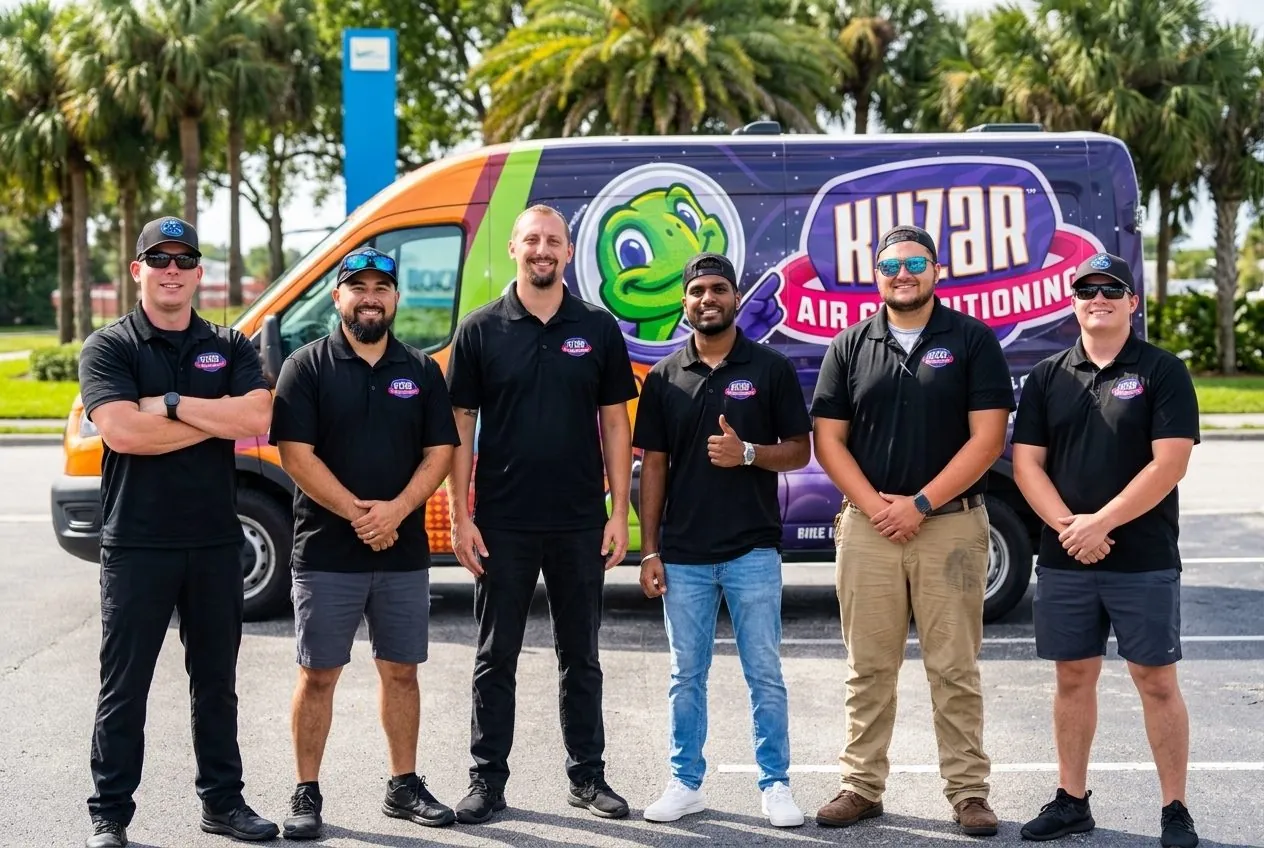
The people in this photo are the ones who show up. Our own employees, on our own trucks, backed by the things below.
Same day
Real people answer 24/7, seven days a week. New systems can go in next day.
Lifetime
A lifetime warranty is available on qualifying systems. Nobody else in South Florida offers it.
0% / 60 mo
Ten lenders compete for your rate. Approvals down to a 550 score.
4.9★
2,771 Google reviews earned the slow way, one honest visit at a time.
Licensed
Florida-certified, NATE-trained techs. Permits pulled on every Port St. Lucie install. Lic. CAC1822395.
47 trucks
Our own background-checked employees in uniform and booties. Never subcontractors.
Reviews
Real homeowner reviews about real Kyzar Air Conditioning visits. Midnight emergency repairs, next-morning installs, routine tune-ups. We earned this average the slow way.
★★★★★
David came out to my home in Palm City late at night. The professionalism from Kyzar and David was outstanding. I would highly recommend.
★★★★★
Dee from Kyzar came THE SAME SAY AND FIXED IT!!! This is why I call KYZAR!! Second time I use them and DEE IS SO KNOWLEDGEABLE!!! Thank you! Going to take you up on that plan we discussed for surge protection.
★★★★★
Never really had a good experience with AC people before but David made me feel less stressed about having to deal with an AC problem in this heat. He was very knowledgeable and super nice when explaining the issues!
★★★★★
I have been a customer of Kyzar for the past 6.5 years and have had great service. They installed my new A/C 6 yrs ago which was cost effective and energy efficient. My service today was quick and easy and Brandon is very knowledgeable about the unit. He gave me some great tips to keep my A/C in good working order between visits. Very personable and professional at all times. Kyzar came out to my place in Greenacres and performed a maintenance…
★★★★★
Howard provided outstanding service in a very knowledgeable process. Everything was explained to me in order to make correct decisions about my ac.
★★★★★
great service my system went down last night as we got home from dinner almost ruined a great time but kyzar showed up and saved the day !!!!
★★★★★
Thank you for helping me. My unit is back to working again! I will definitely be adding you as my new HVAC company! Five stars!
★★★★★
Technician came out and was VERY professional and throughly fixed my issues. So happy I switched to this company. Highly recommend.
Service areas
We cover every corner of Port St. Lucie: the new-construction communities out west in Tradition, Southern Grove and St. Lucie West, the golf neighborhoods at PGA Village and The Vineyards, and the older established sections in the east and center like Sandpiper Bay, River Park, Torino and the streets off US-1 and the Crosstown Parkway.
Our Port St. Lucie office in Tradition is minutes from most of the city, and the same crews that cover Port St. Lucie work the surrounding Treasure Coast towns every week: Fort Pierce just north up I-95, Stuart and Palm City to the south, and Jensen Beach along the coast. If you are anywhere in St. Lucie County, we have trucks running near you most days.
© OpenStreetMap contributors · © CARTO
The branch that serves Port St. Lucie
Open 24/7. A real person answers, seven days a week.
More Kyzar service areas across South Florida
Questions we hear every day
Same day in most cases, and we mean it. Our office is right here in Tradition, we run techs across Port St. Lucie seven days a week, and a real person answers our phones 24/7. Unlike the companies whose round-the-clock line quietly rolls to voicemail, we take new customers on nights and weekends. Call and we will tell you honestly when we can be there.
It depends on what is actually broken, so we start with a diagnostic, and that diagnostic fee is credited toward the repair when we do the work. You get the real price in writing before we touch anything. Estimates on new systems are always free, and they include the ductwork evaluation.
You get both quotes, every time, no matter the age. A lot of the eastern and central sections, Sandpiper Bay and Torino among them, still run R-22-era systems that are aging out together, and refrigerant for those is expensive and disappearing. But age alone does not decide it. We diagnose first, and if a repair is the smart money, that is what we will tell you.
New does not mean installed right. Nationally, 65% to 75% of new systems are not put in to manufacturer spec, and a builder-grade install in Tradition or Southern Grove can leave you with weak airflow, short cycling or humidity problems from day one. We will diagnose it, tell you what the builder missed, and fix it without automatically pushing a whole new system.
Always, both. Installing outside manufacturer spec technically voids the warranty on a system you just paid five figures for, and skipping the permit can haunt you at resale. We install to spec and pull the Port St. Lucie permit on every job, because who installs the equipment matters more than which box you buy.
Locally owned, and it is a fair question, because roughly 70% of the AC companies in this region are now PE-owned. Kyzar is owned by Paolo Weston, and our office is right here in Tradition. Our techs are our own employees, background checked and drug tested, never subcontractors.
Still have a question? Call us at (561) 640-1000.

Same-day service, honest diagnostics, and a real person on the phone 24/7. Your comfort is one call away.