We're available. Give us a call.(561) 640-1000
Looking for a new AC? We handle AC installation and full air conditioner replacement across Palm Beach County and the Treasure Coast, and July is when the oldest systems finally force the decision. Right-sized equipment, installed to manufacturer spec, permits pulled.
Book your same-day visit & get $50 off any service.
0% interest financing for 60 months
Licensed, bonded & insured
Lifetime warranty available
Same-day service, next-day installs
What's included
The box you buy matters less than who installs it. Here's what comes standard on every Kyzar system.
We run a real Manual J load calculation instead of matching whatever was there before. An oversized unit short-cycles and never dehumidifies. Yours will be sized for your home.
About 85% of homes built for old R-22 systems are ducted wrong for a modern system. We check yours before quoting, because a great unit on bad ducts still underperforms.
65 to 75% of new installs nationally aren't done to spec, which quietly voids the warranty. Who installs the box matters more than the box. Ours is done by the book.
Every install is permitted and inspected. Chuck-in-a-truck skips this to save a day; we don't, because it protects you if you ever sell.
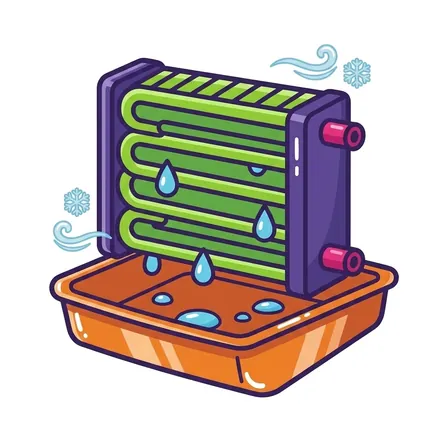
Small detail, big deal in Florida humidity. Copper pans hold up where plastic cracks and leaks, so you're not calling us about a ceiling stain in year three.

A lifetime warranty is available on qualifying systems, backed by an install done to spec so the coverage actually holds. Nobody else in Southeast Florida offers it.
Also in our wheelhouse:AC RepairAC MaintenanceDuct Cleaning
The equipment
We're a Lennox Premier Dealer and a York Certified Comfort Expert, with NATE-certified techs factory-trained on the systems we install. Buying a new unit? You get top-tier equipment and an install done to spec.
Already have a system? We repair and service every major brand, no matter who put it in.



Every major brand, installed & repaired


Why Kyzar
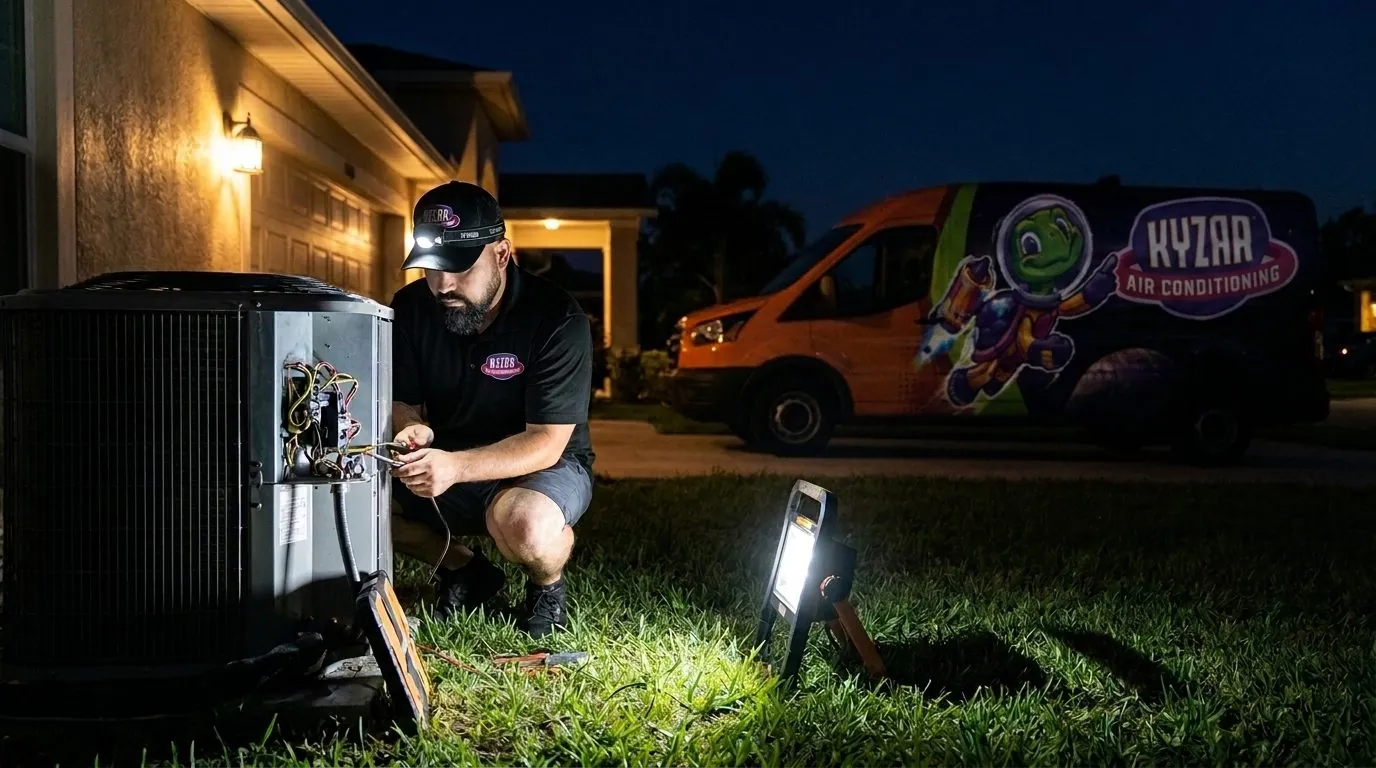
Nobody plans to replace a system in the hottest month, and a rushed peak-season install is how one bad week becomes a decade of mediocre cooling. Who installs the box matters more than the box. We size it right, set the charge and airflow to manufacturer spec, evaluate the ductwork first because a great unit on bad ducts cannot win a Florida summer, and pull the permit every time.
Locally owned
Our own techs
2,700+ reviews
Install reviews
Real homeowners, real Kyzar visits, from Boca Raton to Port St. Lucie.
Right-sized systems, clean installs, permits pulled. We've earned our 4.9★ average by treating your install like it's going in our own home.
★★★★★
David came out to my home in Palm City late at night. The professionalism from Kyzar and David was outstanding. I would highly recommend.
★★★★★
Dee from Kyzar came THE SAME SAY AND FIXED IT!!! This is why I call KYZAR!! Second time I use them and DEE IS SO KNOWLEDGEABLE!!! Thank you! Going to take you up on that plan we discussed for surge protection.
★★★★★
Never really had a good experience with AC people before but David made me feel less stressed about having to deal with an AC problem in this heat. He was very knowledgeable and super nice when explaining the issues!
★★★★★
I have been a customer of Kyzar for the past 6.5 years and have had great service. They installed my new A/C 6 yrs ago which was cost effective and energy efficient. My service today was quick and easy and Brandon is very knowledgeable about the unit. He gave me some great tips to keep my A/C in good working order between visits. Very personable and professional at all times. Kyzar came out to my place in Greenacres and performed a maintenance…
★★★★★
Howard provided outstanding service in a very knowledgeable process. Everything was explained to me in order to make correct decisions about my ac.
★★★★★
great service my system went down last night as we got home from dinner almost ruined a great time but kyzar showed up and saved the day !!!!
★★★★★
Thank you for helping me. My unit is back to working again! I will definitely be adding you as my new HVAC company! Five stars!
★★★★★
Technician came out and was VERY professional and throughly fixed my issues. So happy I switched to this company. Highly recommend.
Service areas
Two home bases. One fast fleet. 47 trucks dispatched from West Palm Beach and Port St. Lucie, covering Broward, Palm Beach County and the Treasure Coast, seven days a week.
47 trucks on the road
~3 min form callbacks
24/7 live answer, 7 days
Don't see your area? Give us a call. We'll tell you straight.
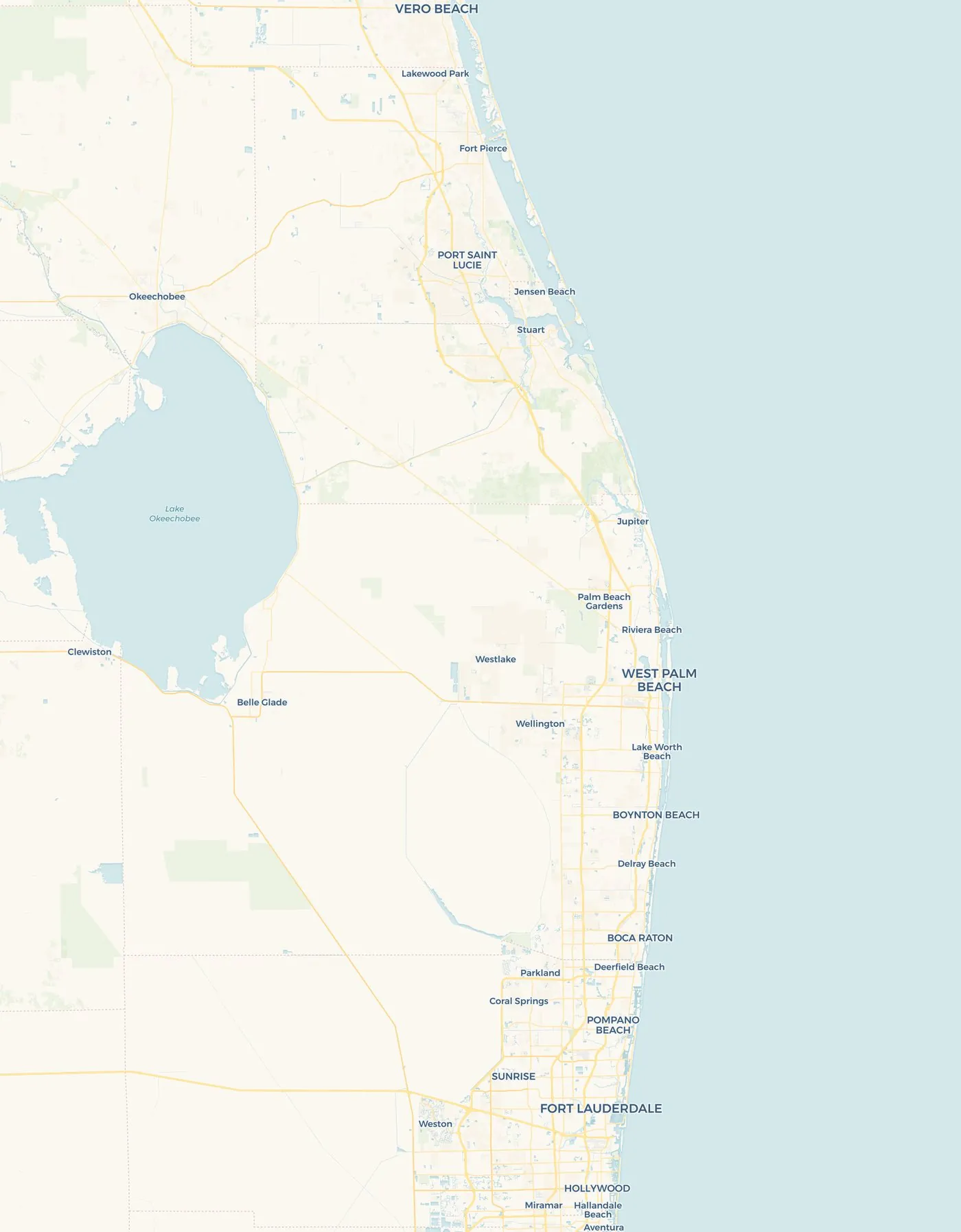
Our offices Cities we serve Full-coverage counties
Palm Beach County
Broward County
Install questions
Yes. Estimates on a new system are always free, and there's no obligation. We come out, evaluate your home and ductwork, and give you options in writing.
We diagnose first, every time, even if you tell us you only want a replacement quote. Sometimes a repair buys you real time, and "the last guy didn't even try to diagnose it" is exactly what we don't want to be.
Most residential changeouts are done in a day. If we can't finish same-day, we bring spot coolers so you sleep comfortable in the meantime, and high-end package buyers sometimes get put up in a hotel.
Yes. 0% interest for 60 months on qualifying systems, with about 10 lenders competing for your approval, and we can work with scores down to around 550.
Because a manufacturer's warranty assumes the system was installed exactly to their specifications. When 65 to 75% of installs miss that, the warranty is technically void. We install by the book so your coverage is real.
We're a Lennox Premier Dealer and York Certified Comfort Expert, so we install top-tier equipment factory-trained. But honestly, a properly sized, properly installed mid-tier system beats a premium one installed wrong. We'll walk you through the trade-offs.

Same-day service, honest diagnostics, and a real person on the phone 24/7. Your comfort is one call away.