It is the most common call we get in the summer, and it almost always starts the same way: “It’s blowing, but the air is not cold.” The system sounds like it is working. You can feel air at the vents. But the house just sits there at 78 while the thermostat reads 72.
Here is the first thing worth knowing, because it saves a lot of worry: air moving is not the same as air cooling. The blower fan can push plenty of air through your home while the part of the system that actually removes heat has quietly stopped doing its job. So a running system that will not cool is not one problem. It is any one of about six, and they range from a five-minute fix to the big one.
We have ordered them roughly from cheapest and simplest to most serious, so you can see where your situation might land before anyone comes out.
1. The thermostat is set or reading wrong
Start here, because it is free. Make sure the thermostat is set to cool, the fan is on auto rather than on, and the target temperature is actually below the current room temperature. If the fan is set to “on,” it runs and blows air even when the system is not cooling, which feels exactly like warm-air-from-the-vents.
A thermostat that sits in direct sun, above a lamp, or near a supply vent can also misread the room and cut the cooling short. It is not always the culprit, but it is the fastest thing to rule out.
2. A clogged air filter is choking the system
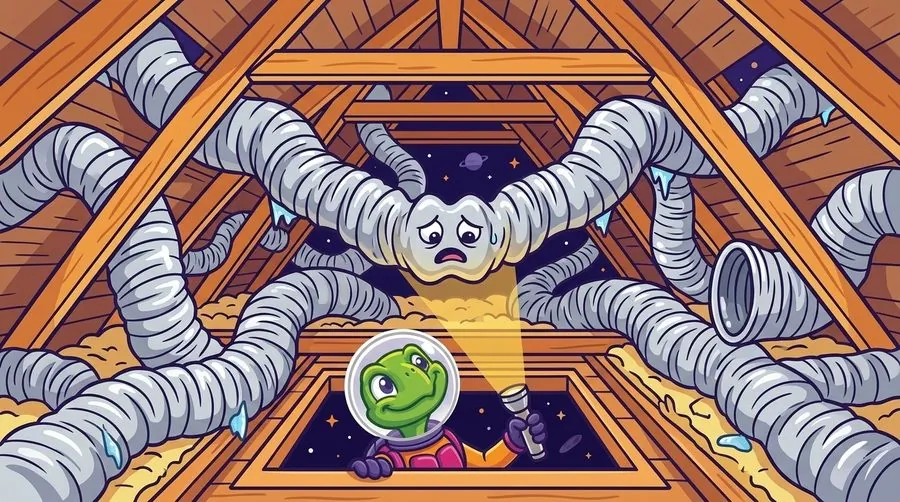
This is the one most people do not believe until they see it. A filter packed with dust starves the system of airflow. Less warm air moves across the cold indoor coil, the system struggles to keep up, and in bad cases the coil gets so cold it freezes into a block of ice, at which point almost no air comes through at all.
Check your filter. If it looks gray and loaded, replace it before you do anything else. It is the cheapest possible fix, and a shocking number of “my AC is broken” calls end right here.
3. The indoor coil has frozen over
If you see ice on the copper line or frost around the indoor unit, the evaporator coil has frozen. A frozen coil cannot pull heat out of the air, so the system runs and runs without cooling.
The move here is to turn cooling off and set the fan to on so the ice can thaw, and leave it off until it does. Do not chip at the ice or force it back into cooling. Freezing is usually caused by an airflow problem (a dirty filter or a weak blower) but it can also point to low refrigerant, which is why what happens after it thaws matters more than the ice itself.
4. The outdoor unit is not shedding heat
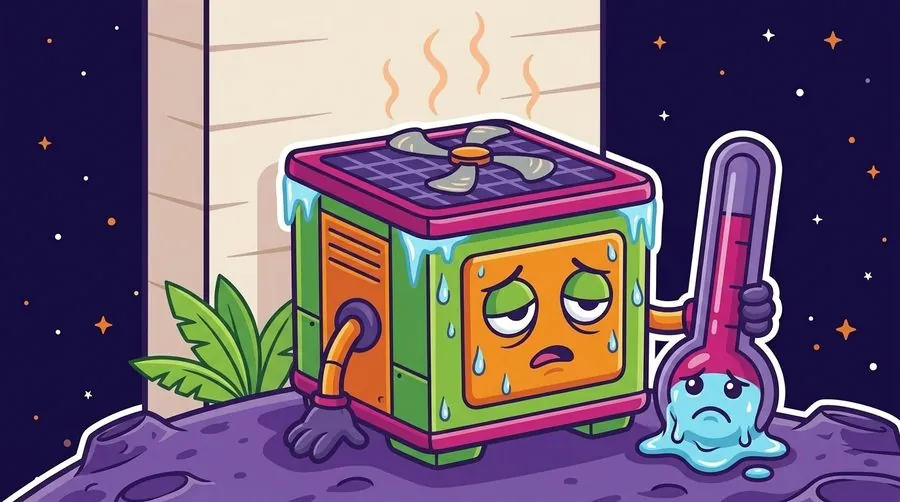
Your outdoor unit has one job: dump the heat your system pulled out of the house into the outside air. If its coil is caked in dust, grass clippings, and dryer lint, or if the outdoor fan is struggling, that heat has nowhere to go. The system runs hard, the house stays warm, and your electric bill climbs.
Take a look outside. If the unit is buried in debris or the fan on top is not spinning while the system is calling for cool, stop there and call. In our salt-air and lawn-clipping climate, a smothered condenser is more common than people expect.
5. A weak capacitor or electrical part
Here is where it moves from homeowner-check territory into testing territory. The capacitor is a small electrical part that helps the motors start and run, and it is one of the most common failures in a South Florida AC, because our systems run nearly year round and heat wears capacitors out.
When it weakens, the outdoor unit might hum but not fully start, or drop out under the load of a hot afternoon, so the indoor side keeps blowing air that never gets cold. This is not something to eyeball. It needs a meter, which is exactly the kind of thing a tech confirms on site instead of guessing at.
6. Low refrigerant from a leak
If the refrigerant charge is low, the system cannot move heat properly, and you get weak cooling, freezing, or a system that runs all day without keeping up. But here is the honest part most companies skip: refrigerant is not fuel, and it does not get “used up.” If you are low, you have a leak, or the system was charged wrong to begin with.
That is why simply “adding a pound of Freon” is a band-aid. It cools for a few weeks, then you are right back where you started, minus the cost of the refrigerant. The right move is to find the leak, and a good tech will tell you that straight.
And the big one: the compressor
At the serious end sits the compressor, the heart of the whole refrigerant circuit. When it fails, you usually get no real cooling, sometimes loud humming or a breaker that trips. It is the most expensive part of the system, and it is the one moment where the repair-or-replace conversation becomes real.
We will not sugarcoat it, but we also will not jump to it. Plenty of “it must be the compressor” symptoms turn out to be a capacitor or a contactor once someone actually tests the unit. That distinction can be the difference between a modest repair and a new system, so it is worth getting right.
Why we will not quote it over the phone
You may have noticed we did not put a price next to each of these. That is on purpose. Anyone who quotes you a repair cost for “not cooling” sight unseen is guessing, because the same symptom, warm air from the vents, can be a twelve-dollar filter or a failed compressor.
What we will promise is this: we diagnose the system first, we hand you a written repair quote before we touch anything, and you get that quote at any system age, even on an old unit. We are AC mechanics, not AC salesmen, so if the honest answer is “this one is an easy fix,” that is what you will hear.
If your AC is blowing warm and the house is not catching up, do the two free checks first (thermostat and filter). If that does not do it, book a visit online in under a minute or call us at (561) 640-1000. A real person answers 24/7, and in most cases we can be out the same day.