You've probably been told your new air conditioner comes with a "10-year warranty." You signed the paperwork. You felt good about it. Then, four years later, the compressor fails on a 94-degree afternoon in West Palm Beach, the tech hands you a $1,400 bill, and you start asking the question nobody warned you about: if the part's covered, why am I paying this much?
That's the gap this article exists to close. Because the standard manufacturer's HVAC warranty — the one you got — covers parts. Not labor. Not refrigerant. Not the diagnostic fee. And in Florida, where salt air, hurricane surges, and humidity grind systems harder than anywhere else in the country, the labor side of an AC repair is where the real money lives.
So let's walk through it honestly. What an AC warranty actually includes. What it leaves you exposed to. What voids it without you knowing. And why Kyzar built our up-to-15-year coverage stack the way we did — for homeowners from Wellington to Tradition who want the bill to match the promise.
The Honest Truth About a Standard "10-Year Warranty"
Here's what almost no manufacturer brochure spells out plainly: the "10-year warranty" stamped on Carrier, Trane, Lennox, Goodman, and the rest is a parts-only, registered, conditional warranty. Three words doing a lot of heavy lifting.
Parts-only means the manufacturer ships a replacement compressor, coil, or board to your contractor. They don't pay anyone to install it.
Registered means you (or your installer) had to register the unit with the manufacturer within 60 to 90 days of installation. Miss that window and your 10-year warranty often drops to 5 — sometimes less. We've seen it firsthand.
Conditional means the warranty can be voided by improper installation, missed maintenance, unauthorized repairs, or a long list of fine-print triggers we'll get to in a minute.
When a homeowner in Boca or Stuart calls and says, "But it's under warranty, why is there a charge?" — this is the answer. The warranty is real. It's just narrower than they were led to believe.
Parts Warranty vs. Labor Warranty — The Distinction That Costs Most Homeowners Thousands
Two different warranties. Two different issuers. Two completely different scopes. And the line between them is exactly where most homeowners get blindsided.
What the manufacturer's parts warranty actually covers
The manufacturer warranty (your "10-year") covers the major components if they fail because of a defect. That generally means:
- Compressor
- Evaporator coil
- Condenser coil
- Most factory-installed electronic boards
- Major sensors and motors (terms vary by brand)
What it does not cover, even with a registered, valid warranty:
- The labor to remove the failed part
- The labor to install the replacement
- Recovery of the old refrigerant
- The new refrigerant charge
- Diagnostic fees, trip charges, or permit costs
- Anything caused by power surges, lightning, flooding, or storm damage
- Wear-and-tear items like capacitors, contactors, drain pans, filters
Here's the simplest way to picture it: imagine the manufacturer mails you a free replacement compressor on a pallet. Now you still need a licensed contractor with a recovery machine, a vacuum pump, and three to six hours of work to actually put it in your house.
What labor would cost without coverage
These are real South Florida numbers we quote every week:
- Compressor R&R (remove and replace): $1,200 – $2,800 depending on tonnage, system access, and whether the line set has to be flushed
- Evaporator coil replacement: $900 – $1,800 in labor alone
- Condenser fan motor: $300 – $550 (parts often not covered after year 5 on lower-tier brands)
- TXV / metering device: $400 – $700 in labor
- Refrigerant recovery + recharge after a covered repair: $400 – $1,200, depending on charge size and refrigerant type
Multiply that across a 10-year ownership window and the math gets uncomfortable. A manufacturer parts warranty is genuinely valuable — it can save you four figures on a single failure — but it's not the safety net most people think it is.
Refrigerant: the hidden cost no one warns you about
This one stings the most. If your evaporator coil has a slow leak (a common failure in coastal humidity), the manufacturer may cover the coil. They will not cover the refrigerant required to refill the system after the repair.
Current South Florida pricing:
- R-410A: $80 – $150 per pound (and climbing as it phases out)
- R-454B (the newer A2L refrigerant on most 2025+ systems): roughly $100 – $175 per pound right now, supply-dependent
A 3-ton system holds 6 to 9 pounds. Do the math on a full recharge after a leak repair and you're at $500 to over $1,500 — on top of labor — on a "warranty-covered" failure.
And here's the kicker: if a tech tops off your refrigerant without finding and fixing the leak, you're back in the same spot in eight months. That's why the way the repair is done matters as much as the warranty itself.
What Voids a Standard HVAC Warranty (and How Cheap Installers Set You Up to Lose It)
This is the part most companies won't tell you. Voiding a warranty almost never happens because of one dramatic mistake. It happens slowly, quietly, through paperwork and shortcuts at the time of installation.
The warranty voids most homeowners never see coming aren't from misuse — they're from the installer cutting corners on the install day. Unregistered units, missed permits, undersized line sets, no nitrogen purge during brazing, no documented tune-ups. By the time the compressor fails in year six, the manufacturer has every reason to deny the claim.
The most common warranty-voiding issues we see in South Florida homes:
- Failure to register within the manufacturer's window (often 60–90 days post-install)
- No permit pulled for the installation (Florida code, and it matters for warranty validity)
- No documented annual maintenance — most manufacturers require it in writing
- Unauthorized repairs by an unlicensed handyman or a homeowner DIY
- Improper installation — undersized breaker, wrong line set diameter, no nitrogen purge during brazing, oversized or undersized system
- Mismatched components — installing a new condenser on an old air handler can void the matched-system rating
- Use of non-OEM parts during a prior repair
- Damage from "acts of nature" that weren't mitigated (we'll get to hurricane prep)
That last category is one the standard warranty disclaimers love. A surge from a thunderstorm fries your board? Often denied. Storm flooding? Denied. Salt corrosion in a coastal home with no anti-corrosion coil package? Denied or prorated.
How Kyzar's Up-to-15-Year Warranty Coverage Actually Works
Let's be transparent: "up to 15 years" is not a blanket promise on every install. It's a stack — three pieces working together — and it depends on the system you choose and whether you stay on a maintenance plan with us. Here's how it breaks down.
The manufacturer parts component
We register every system we install within 7 days. Always. The full manufacturer parts warranty (typically 10 years on major components, sometimes 12 on premium tiers) is locked in from day one. No paperwork on you. No 60-day clock to worry about.
The Kyzar labor extension
This is where most South Florida contractors stop and we don't. On qualifying new AC installation packages, we extend labor coverage on top of the manufacturer's parts warranty — up to 15 years on premium-tier systems with our maintenance partnership. That means when a covered part fails in year 8, you're not paying $1,400 in labor to put it in. We absorb that.
The labor extension covers the technician time, the refrigerant recovery, and standard return-trip diagnostics on covered failures. It does not cover physical damage, surge events without a surge protector installed, or systems that fall out of maintenance compliance — which leads us to the third leg.
The maintenance partnership that keeps it valid
Our maintenance plans aren't an upsell. They're the documentation that keeps the entire warranty stack legally valid. Two visits a year — one before cooling season, one before the brief winter dry-out — gives you:
- Documented service history (the manufacturer's audit trail)
- Coil cleaning that prevents the slow refrigerant leaks coastal salt air causes
- Capacitor and contactor checks before they fail in 95-degree weather
- Filter and drain line service that prevents secondary damage
Skip maintenance for two years and most warranties — ours included — start to wind down on labor coverage. Stay on the plan and the stack holds for the full term.
You can read the full coverage breakdown on our warranty page, and our deeper rationale on why Kyzar built the stack this way.
What's Covered vs. What's NOT — Standard 10-Year Manufacturer Warranty
| Item | Covered Under Standard 10-Year? | Typical Out-of-Pocket Without Labor Plan |
|---|---|---|
| Compressor (defect) | Yes (parts only) | $1,200 – $2,800 labor |
| Evaporator coil leak | Yes (parts only, if registered) | $900 – $1,800 labor |
| Condenser fan motor | Sometimes (varies by year & brand) | $300 – $550 |
| Refrigerant refill (R-410A) | No | $80 – $150 / lb |
| Refrigerant refill (R-454B) | No | $100 – $175 / lb |
| Capacitor / contactor | Rarely after year 1 | $150 – $400 |
| Diagnostic / trip fee | No | $89 – $189 per visit |
| Storm or surge damage | No | Full out-of-pocket |
| Salt-air corrosion | No (unless coil-coat package) | Varies — often replacement |
| Labor on any covered part | No | $400 – $2,800+ |
That right column is the bill homeowners weren't expecting. It's also why the "warranty" line item on a quote deserves more scrutiny than the brand sticker on the unit.
Florida-Specific Warranty Considerations (Hurricane, Salt Air, Humidity)
Living between West Palm Beach and Port St. Lucie means your AC works harder than almost anywhere else in the country. The warranty implications are real:
- Salt-air corrosion on coastal homes (Singer Island, Jupiter, Hutchinson Island, Stuart) eats condenser coils. Most warranties exclude corrosion damage unless you spec an anti-corrosion coil package at install. We default to it on coastal jobs.
- Hurricane debris and storm surge are excluded from every manufacturer warranty we've ever read. We strap and pad units to spec, and we'll tell you honestly when a unit needs to be raised for surge zones.
- Lightning and grid surges are common during summer thunderstorms. A whole-home or unit-level surge protector is typically required for warranty surge claims to even be considered.
- Humidity load in Tradition, Riverland, and the inland communities means oversized systems short-cycle and undersized ones run forever — both shorten lifespan and can be flagged as "improper application" in a warranty dispute. Manual J load calc at install isn't optional for us.
Every one of these factors gets handled at the time of install. Get them wrong and the warranty paper is essentially decorative.
What to Ask Any HVAC Company About Their Warranty Before You Sign
If you're getting quotes — from us or anyone else — these are the questions that separate real coverage from marketing copy:
- Is the labor warranty in writing in my contract, or is it verbal?
- Who administers the labor warranty — the contractor, or a third-party admin company?
- Will you register the manufacturer warranty for me, in writing, within 30 days?
- Is the labor warranty transferable if I sell my home?
- Does the labor coverage include refrigerant?
- What happens to my warranty if I miss a maintenance visit?
- Can I see a sample warranty certificate before I commit?
If any of those get a vague answer, that's the answer. A real warranty has a paper trail. Call us at (561) 951-7088 and we'll walk through ours line by line — no pressure, no quote required.
Frequently Asked Questions About AC Warranties
How long should a new AC last in Florida? A properly installed and maintained system in South Florida typically runs 12 to 17 years. Coastal exposure, runtime hours (we run cooling 8+ months a year), and maintenance discipline are the three biggest variables. Skipped tune-ups and undersized line sets are the two failures we see cut that lifespan in half.
What's the difference between a parts warranty and a labor warranty? The parts warranty comes from the manufacturer and covers the cost of the replacement component. The labor warranty comes from your contractor and covers the cost of the technician time to diagnose, remove, and install that part — plus refrigerant in most cases. You generally need both for full protection.
Does my HVAC warranty require annual maintenance? Most manufacturer warranties require — or strongly imply — documented annual maintenance by a licensed contractor. If a claim is filed and there's no service record, denials are common. This is exactly why we tie our labor extension to a maintenance agreement: so the documentation never lapses.
What can void my AC warranty? The biggest five: failure to register, no permit on the install, undocumented or skipped maintenance, unauthorized repairs by an unlicensed party, and improper installation (mismatched components, wrong refrigerant charge, no nitrogen purge during brazing). Storm and surge damage are also typically excluded unless protections were specified at install.
Is an extended warranty on a new AC worth it? For most South Florida homeowners, yes — but only if it's a labor warranty backed by the installing contractor, not a third-party administrator with hidden exclusions. The math works out fast: one compressor failure in year 7 is usually $1,500+ in labor and refrigerant alone. A real labor extension pays for itself on a single covered repair.
Are HVAC warranties transferable when I sell my home? Manufacturer warranties are sometimes transferable, often with a fee and a 30-to-90-day registration window after closing. Labor warranties depend entirely on the contractor — ours can be transferred to a new homeowner with proper documentation, which is a strong selling point if you list the property.
Does the warranty cover refrigerant if my unit leaks? The manufacturer warranty almost never covers the refrigerant itself — only the leaking component. With R-410A pricing at $80–$150/lb and R-454B running higher, a full recharge can run $500–$1,500. A real labor warranty (like ours) includes refrigerant on covered failures, which is where the savings show up.
What does a 10-year warranty actually mean? It means the manufacturer will provide replacement parts for covered components for 10 years from the install date — provided the unit was registered, installed to spec, and maintained. It does not include labor, diagnostic fees, refrigerant, or wear items. Read it as "10-year parts" and you'll set your expectations correctly.
Why do some HVAC companies offer 15-year warranties when manufacturers only offer 10? Because the contractor is adding their own labor warranty on top of the manufacturer's parts warranty. The 10 years come from the factory. The extra 5 come from the contractor agreeing to absorb labor and refrigerant costs on covered failures. It's a real, valuable extension — but only as strong as the contractor backing it.
Do I have to use the original installer for warranty repairs? For your manufacturer parts warranty, no — any factory-authorized dealer can usually file a claim. For your labor warranty, yes — labor extensions are issued by the installing contractor and don't transfer to other companies. That's why picking the right installer the first time matters more than picking the brand. If you need AC repair on a system we installed, we have your full file on day one.
Ready to Talk About a New System? Here's the Starting Point.
If your current system is in the 8-to-12-year window — or you're already getting quotes — let us walk you through a real warranty stack, in writing, before you sign anything. No high-pressure pitch. Just the math and the paperwork.
Schedule a free quote online in about 30 seconds, or call our team directly at (561) 951-7088. We'll give you the same straight answers we'd give a neighbor.
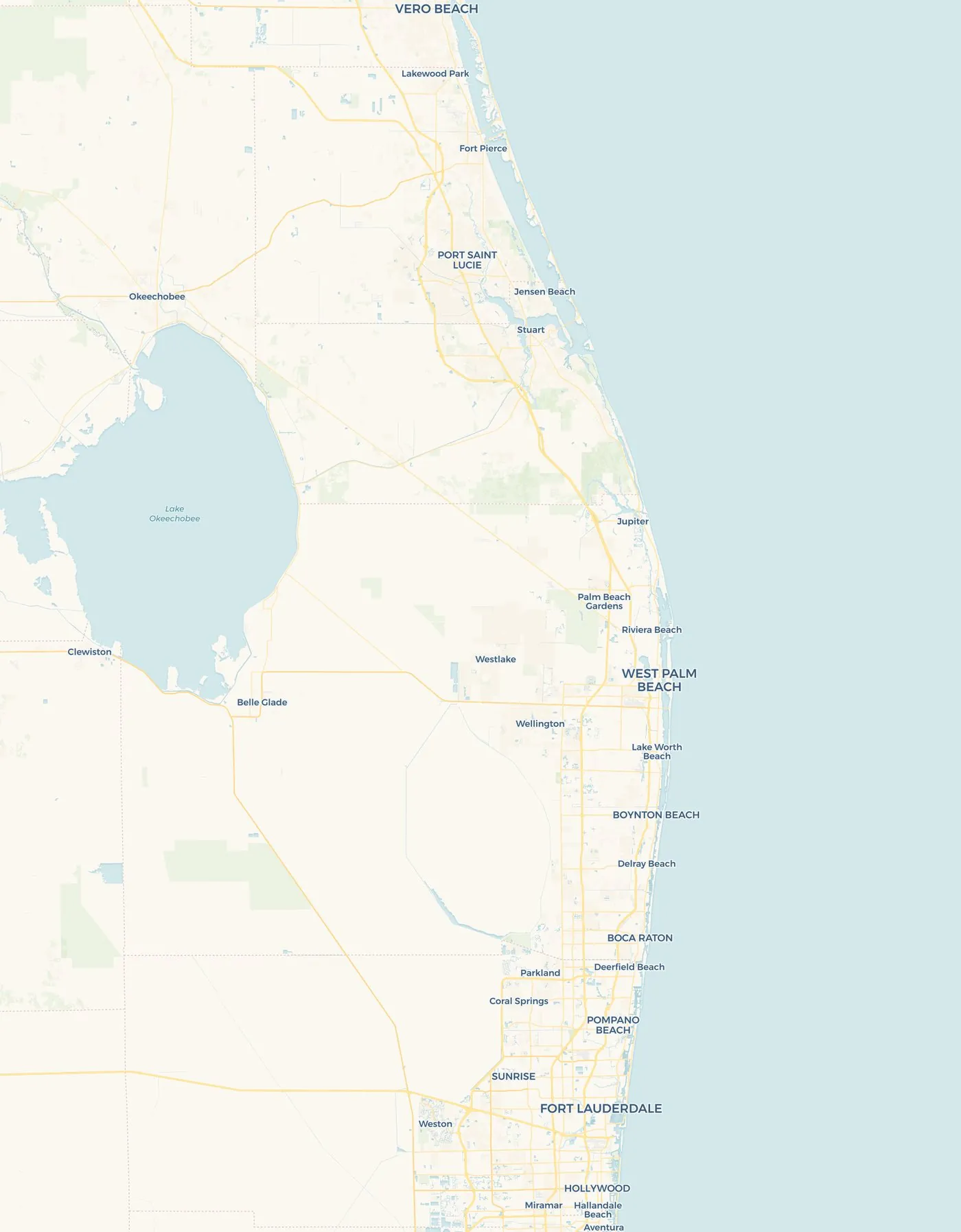
Kyzar Air Conditioning Serving West Palm Beach, Port St. Lucie, and the Treasure Coast.
West Palm Beach Office 2636 Old Okeechobee Rd, West Palm Beach, FL (561) 951-7088
Port St. Lucie Office Port St. Lucie, FL (561) 951-7088
Get a Free Quote · Why Kyzar · AC Installation · Maintenance Plans · Warranty Details