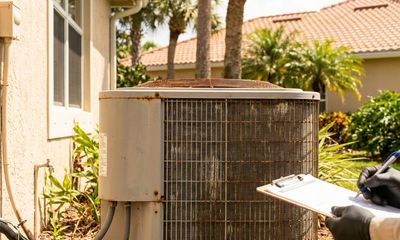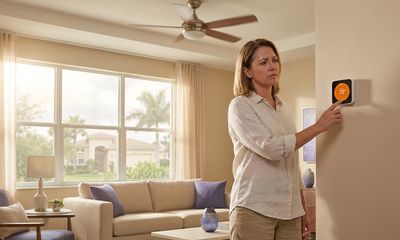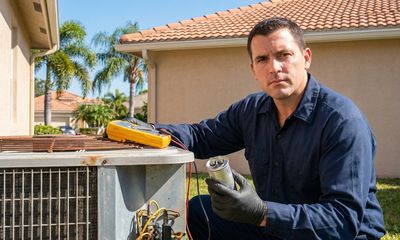
A lot of homeowners on the Treasure Coast learn this the hard way. The unit was installed nine years ago — well within "should still be working" range — and then on a Friday in July, the condenser stops cooling. The tech opens the access panel and you see it: green and white powder packed into the fin pack, copper lines pitted, the contactor crusty.
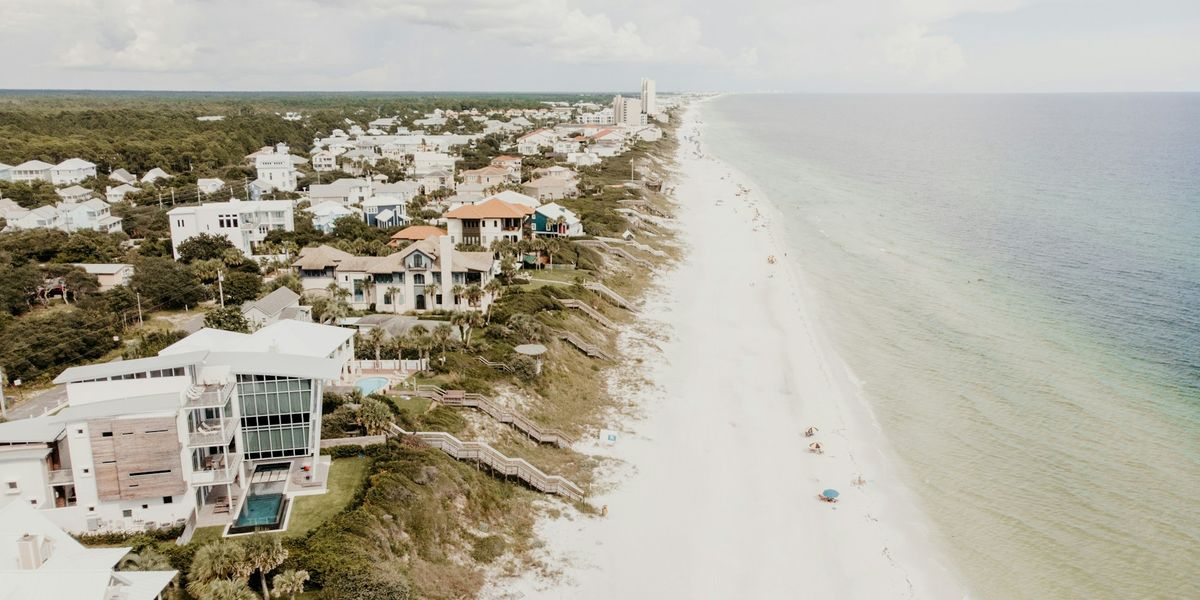
The system didn't die because of bad luck. It died because the salt air on Hutchinson Island, Jensen Beach, the Singer Island side of Riviera Beach, and the oceanfront stretches of Stuart and Fort Pierce is constantly working against any metal that sits outside. And condensers are made of metal.
This is the article we wish every coastal homeowner read before they bought their last unit.
The 60-Second Version
Sea salt and humid Florida air corrode standard aluminum-and-copper condenser coils 30-60% faster than the same units inland. Coastal homes (anything within 3 miles of the Atlantic) typically see condenser life of 7 to 10 years instead of the 12-14 inland units get. Solutions exist, and they're real: corrosion-protected (sea-coast) coils, annual professional washes, smart placement, and proactive coil sealing. The premium for a sea-coast install is usually $400-$900, and it pays for itself the first time you don't have to replace a coil at year 7.
Why Salt Air Wrecks AC Condensers
Your outdoor unit is essentially a giant radiator. To cool your house, it has to expel heat — which means a fan pulls outside air through the coil, hour after hour, all summer. In coastal Florida, that air carries microscopic sea-salt particles. Those particles collect in the fin pack, dissolve in humidity, and become a thin layer of conductive salt water sitting on aluminum fins and copper tubing.
That's the recipe for galvanic corrosion: two dissimilar metals (aluminum fins, copper tubing) connected by an electrolyte (salty moisture) form a tiny battery. The aluminum oxidizes, the copper pits, and over time you get the white powder, the green corrosion crust, and eventually pinhole leaks in the refrigerant lines.
The further inland you live, the less salt is in the air. The closer to the beach, the more aggressive the attack. Hutchinson Island and Jensen Beach Causeway homeowners are essentially running their AC inside a salt fog.
Coastal vs. Inland: The Real Numbers
These are typical lifespans we see on the Treasure Coast:
- Direct oceanfront (within 1,000 ft of the Atlantic): 5-8 years on standard condensers, 10-12 on sea-coast-rated units.
- Within 1 mile of the Atlantic: 7-10 years standard, 12-15 sea-coast.
- 1-3 miles inland: 9-12 years standard, 13-16 sea-coast.
- 3+ miles inland (Tradition, St. Lucie West, most of Port St. Lucie): 12-14 years on any unit. Salt is rarely the limiting factor here.
So if you're in Tradition or St. Lucie West, salt-air protection is optional — nice to have, but not the make-or-break investment. If you're east of US-1, especially anywhere on Hutchinson Island, Jensen Beach, or coastal Stuart, it's the single most impactful upgrade you can make to extend your system's life.
The 5 Signs Your Coastal Condenser Is Corroding
You don't need a tech to spot this. Walk outside and look at the unit.
- White or green powder on the aluminum fins. That's oxidation. Some is normal at year 3+. A heavy coating means the fins are losing their heat-transfer surface — and your AC is working harder, costing you more, and getting hotter as it runs.
- Copper tubes turning dark green. Surface corrosion, eventually leading to pitting.
- Fins that crumble or flake when you touch them. Late-stage. The fin pack is structurally compromised.
- Rust on the cabinet, bolts, or the metal feet/pad anchors. A sign of how aggressive the local environment is.
- An unexplained refrigerant leak. Pinholes through corroded copper are one of the most common causes of mystery refrigerant loss on systems 6-10 years old in coastal homes.
If you're seeing #3 or #5, the coil is on borrowed time. Plan accordingly.
How to Slow It Down
You can't stop the salt. You can buy yourself years.
Buy the right coil at install time
When you replace a coastal system, ask for one of these (different manufacturers use different names for essentially the same thing):
- Trane / American Standard: "Sea-coast" or "Spine Fin with epoxy coating."
- Carrier / Bryant: "WeatherArmor Ultra" or post-coated outdoor coil.
- Lennox: "MeritShield" coastal-grade option.
- Goodman / Daikin: "Coastal Climate Coil" upgrade.
- Aftermarket: A separate coil-coating spray-on application (Heresite, Blygold, or similar) applied after install.
The upcharge for a sea-coast coil is typically $400 to $900 on a new system. The math is simple — if it adds even 3 years of life to a $12,000 system, it pays back roughly 3-to-1.
Wash the coil every year (twice if you're oceanfront)
A professional coil wash with biodegradable HVAC-safe cleaner removes the salt layer before it does irreversible damage. Twice a year — once in spring before the heat, once after hurricane season closes — is the sweet spot for direct oceanfront homes. Once a year is fine for everywhere else east of US-1.
DIY caution: pressure washing can fold the fins flat, which permanently kills your heat exchange. If you do it yourself, use a regular garden hose with a low-pressure spray and a fin comb afterwards. Don't aim a power washer at it.
Consider a maintenance plan that includes coil washes
Most maintenance agreements bundle the annual coil wash in — which is exactly the value coastal homeowners get out of these plans. Inland customers benefit from priority service and the small electrical/refrigerant checks. Coastal customers benefit from the wash specifically.
Be smart about placement
This is for new construction or major retrofits, but worth knowing:
- Don't put the condenser on the windward side of the house if you can avoid it. Salt-laden onshore wind drives directly into the coil all day.
- Pad height matters. Get the unit up off ground level if you're in a flood-prone or sandy zone — saltwater intrusion at ground level eats the base fast.
- Avoid pool decks and direct splash zones. Chlorinated pool water aerosol is its own corrosion vector, separate from salt air.
The Warranty Trap to Watch Out For
Here's the thing manufacturers don't advertise: standard manufacturer warranties on outdoor coils are typically 10 years on the metal — but they often exclude corrosion damage unless you bought the corrosion-protected version. So a homeowner in Hutchinson Island can have a 7-year-old system with a leaking coil, file a warranty claim, and get told "corrosion isn't covered, sorry."
This is a major reason we push our 15-year full warranty on coastal installs. It's a Kyzar-backed warranty, not a manufacturer one, and it covers exactly the failure modes salt-air homes actually see. Read the warranty before you sign for any system — if it excludes corrosion and you live east of US-1, you're not really covered.
A Quick Self-Check Walk-Around
Spend 60 seconds outside next time you're walking the property. Look at:
- The color of the fins (silver = good, white powder = early corrosion, green = advanced)
- Whether the fan grille shows rust at the bolts
- The base of the unit (is the steel pad anchor rusting?)
- The copper line set going into the side of the house (any green crust?)
If any of those look bad, get a professional eyes-on inspection before next summer. Catching salt corrosion at year 5 means you can do a wash + coating treatment for $300-$500 and add years. Catching it at year 9 with a leaking coil is a $1,800-$3,500 repair on a system that's near end-of-life anyway — which often pushes you straight into a replacement decision.
Frequently Asked Questions
Does salt air really make that much difference to an AC unit?
Yes. Coastal Florida AC condensers fail 30-60% faster than inland units due to salt-driven galvanic corrosion on the aluminum-and-copper coil. The closer to the Atlantic, the bigger the gap. Direct oceanfront homes commonly see 5-8 year condenser lifespans vs. 12-14 inland.
Is sea-coast coil protection worth the extra money?
For homes within 3 miles of the Atlantic — almost always yes. The $400-$900 upcharge on a new system typically extends condenser life by 4-6 years, which on a $10,000-$15,000 system is a strong return. For homes 3+ miles inland (Tradition, St. Lucie West, most of inland Port St. Lucie), it's optional.
How often should a coastal AC condenser be washed?
Twice a year for direct oceanfront homes (within 1,000 feet of the Atlantic). Once a year for homes 1-3 miles inland. We typically schedule washes for spring (before the heat) and post-hurricane-season for oceanfront customers.
Can I pressure-wash my AC condenser myself?
We don't recommend it. Pressure washers easily fold aluminum fins flat, permanently damaging your heat exchange surface. Use a garden hose with a gentle spray, top-down, with the breaker off. If you're seeing real corrosion buildup, professional cleaners use biodegradable HVAC-safe foaming chemicals that penetrate salt deposits without damaging the fins.
Why is my AC suddenly losing refrigerant?
The most common cause on coastal Florida systems 6-10 years old is pinhole corrosion leaks in the outdoor coil. Salt eats microscopically through the copper tubing where the refrigerant runs. The leak is usually too small to see, but a tech with a leak detector can pinpoint it. Coil replacement is $1,400-$2,800, which is often where the repair-vs-replace conversation starts.
Does the manufacturer warranty cover corrosion damage?
Usually no. Most major manufacturers (Trane, Carrier, Lennox, Goodman) exclude corrosion damage from their standard outdoor coil warranties unless you've paid for the sea-coast-rated version. Always read the fine print on warranty coverage before you sign for a new install in a coastal home.
What's the difference between coastal-grade and standard condenser coils?
Coastal-grade coils have either an epoxy coating applied to the fins and tubing at the factory or use higher-grade materials (often all-aluminum microchannel construction that eliminates galvanic corrosion entirely). Standard coils are bare aluminum fins on copper tubing, which is the worst possible combination for salt environments.
Should I cover my AC unit during the off-season?
Florida doesn't really have an off-season. Even in winter, brief overnight runs are common, and a cover that traps moisture against the coil is actually worse for corrosion than letting it breathe. Don't cover it. If you want to protect against wind-driven debris, use a top-only cover during named storms — and remove it immediately after.
The Bottom Line for Treasure Coast Homeowners
If you live anywhere from Sebastian down through Stuart and out onto Hutchinson Island, the salt air is doing real work on your AC condenser every single day. The damage is gradual and mostly invisible until something fails — usually around year 7-10 on a standard unit.
Three high-leverage moves:
- When you replace, buy the sea-coast coil upgrade. Worth every dollar east of US-1.
- Schedule annual coil washes (twice a year if you're oceanfront).
- Walk your unit once a month in summer. Catch corrosion early, treat it cheap.
If you'd like a free coastal-grade inspection before next summer — we'll come out, look at the fin condition, flag any pinhole-leak risk, and give you a straight read on remaining life — call (561) 951-7088 or book online. Same-day dispatch across Port St. Lucie, Stuart, Jensen Beach, Fort Pierce, Hutchinson Island, and the rest of the Treasure Coast.
Kyzar Air Conditioning's Port St. Lucie office serves the entire Treasure Coast — PSL core, Tradition, St. Lucie West, Stuart, Jensen Beach, Palm City, Fort Pierce, Sebastian, and the coastal stretches on Hutchinson Island. Coastal-grade installs, honest replacement quotes, and our [15-year warranty](/warranty/) on new systems. Learn more about our [Port St. Lucie AC service area](/service-areas/port-st-lucie/), [AC repair](/ac-repair/), and [maintenance agreements](/maintenance-agreements/).