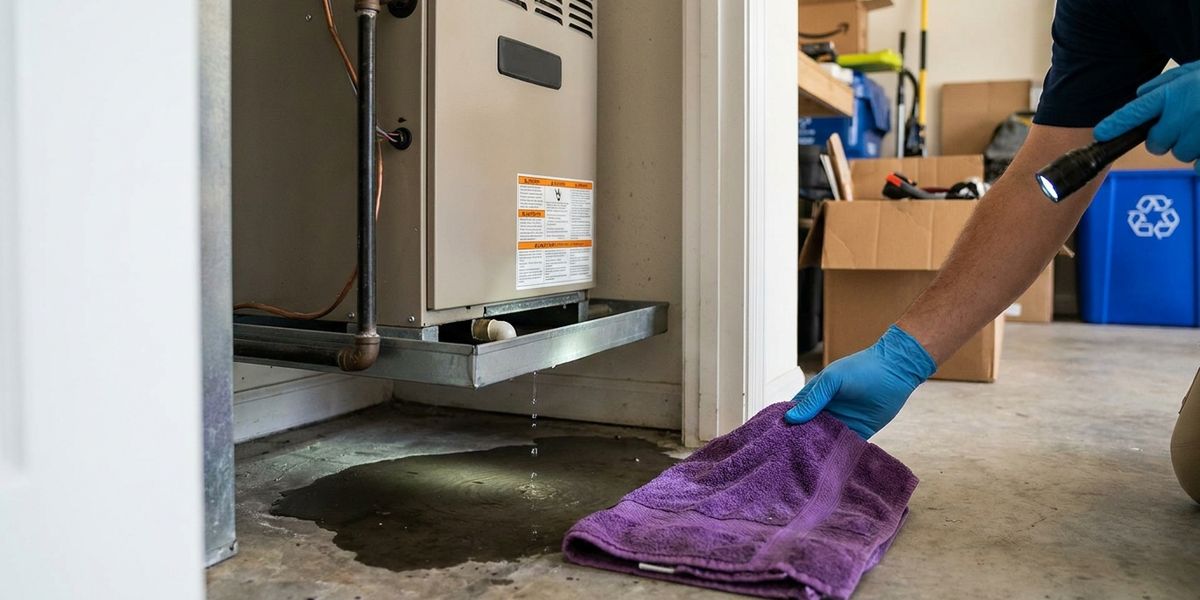
Finding a puddle under your air handler, a drip from a ceiling vent, or water pooling around the indoor unit is alarming — and in Florida, it's common. Your air conditioner pulls an enormous amount of moisture out of the air every day, and all that water has to go somewhere. When the drainage system clogs or fails, the water ends up on your floor, in your ceiling, or in the unit below you in a condo.
The good news: most AC water leaks trace back to a handful of causes, and a couple you can address yourself. Here's how to find the source, what's safe to do, and when to call a pro before it becomes a drywall repair.
First, Do This Now
If water is actively leaking, turn the system off at the thermostat. Running it keeps producing water and can worsen the damage — and on many systems a safety float switch will shut it down anyway. Mop up standing water so it doesn't reach drywall, baseboards, or the ceiling below.
The 5 Most Common Causes of an AC Water Leak
1. Clogged Condensate Drain Line (the #1 cause)
Your AC's condensate line carries water from the indoor coil to outside. In Florida's humidity, that warm, damp line is a perfect home for algae and slime, which clog it. When it backs up, water overflows the drain pan — onto your floor or ceiling.
DIY check: Find the drain pan under the air handler. Standing water there means a clog. A wet/dry vacuum on the outdoor end of the drain line can pull the clog free. When to call a pro: If you can't clear it, it keeps clogging, or the float switch won't reset. Clearing and treating the drain line is also a core part of routine AC maintenance — the best prevention.
2. Dirty Air Filter → Frozen Coil → Meltwater
A clogged filter starves the coil of airflow, and the coil freezes into a block of ice. When it melts, it overwhelms the drain pan and drips everywhere. (A frozen coil is also why the AC stops cooling.)
DIY check: Is the filter dirty? Is there ice on the coil or refrigerant lines? Turn the system to OFF, set the fan to ON to thaw it, and replace the filter. When to call a pro: If it refreezes after thawing — that points to low refrigerant or a deeper airflow problem.
3. Cracked, Rusted, or Misaligned Drain Pan
On older systems, the drain pan under the coil rusts through or cracks, so water drips straight past it. Salt air on the coast speeds up that corrosion.
DIY check: Visually inspect the pan for rust or cracks if you can see it. When to call a pro: Pan replacement is a technician job — and a good moment to assess the age of the whole system.
4. Failed Condensate Pump
Homes where the air handler is in a basement, interior closet, or below the drain line use a small pump to push water out. When the pump fails, water has nowhere to go and overflows.
DIY check: If you have a pump (a small box near the unit), listen for it running and check for water backed up around it. When to call a pro: A failed pump needs replacement — straightforward for a tech.
5. Low Refrigerant
Low refrigerant drops the coil pressure and temperature, which also freezes the coil and leads to overflow when it melts — often alongside warm air and higher bills.
DIY check: None that's safe — refrigerant is federally regulated. When to call a pro: Always. We find and seal the leak, then recharge.
The South Florida Factor
Our climate makes water leaks especially common:
- Relentless humidity means your system removes gallons of water daily — far more than in drier climates — so any drainage flaw shows up fast.
- Algae growth thrives in our warm condensate lines, which is why clogs are the runaway #1 cause here.
- Condo and multi-story risk: in downtown West Palm Beach high-rises and Treasure Coast condos, an overflow doesn't just hit your floor — it can damage the unit below, which makes fast action and routine drain maintenance even more important.
When to Call Kyzar
You can safely change a filter, thaw a frozen coil, and vacuum a drain line. But a recurring clog, a rusted pan, a dead pump, or any refrigerant issue needs a technician — and the sooner the better, since water damage compounds quickly. We dispatch same-day from two local offices:
- West Palm Beach & Palm Beach County: AC repair in West Palm Beach
- Port St. Lucie & the Treasure Coast: AC repair in Port St. Lucie
We find the real source, fix it, and clear the drainage so it doesn't come back. Book online in 7 seconds or call us today.
Frequently Asked Questions
Is an AC water leak an emergency?
It's urgent, not always an emergency. Turn the system off to stop producing water and prevent damage, then schedule service promptly. It becomes more urgent in a condo or multi-story home where water can reach the unit below, or if it's soaking into drywall or the ceiling.
Can I just keep emptying the drain pan?
No — that treats the symptom, not the cause. A full pan almost always means a clogged drain line or a frozen coil upstream. Emptying it buys a little time, but the water will keep coming until the underlying clog or airflow problem is fixed.
Why is water leaking from my ceiling vent?
That usually means the air handler is in the attic and its drain pan is overflowing — typically from a clogged condensate line or frozen coil — and the water is finding its way out through the nearest duct/vent. Turn the system off and call a technician before it stains or damages the ceiling.
How do I prevent my AC from leaking water?
Change your filter every 30–60 days, and have the condensate drain line cleared and treated during regular maintenance. In Florida's humidity, an annual or twice-yearly drain cleaning is the single most effective way to prevent the #1 cause of leaks. A maintenance plan makes it automatic.
How fast can you come out in West Palm Beach or Port St. Lucie?
Usually same day. We dispatch locally from our West Palm Beach and Port St. Lucie offices and can typically reach homes across Palm Beach County and the Treasure Coast within hours — which matters with an active leak.