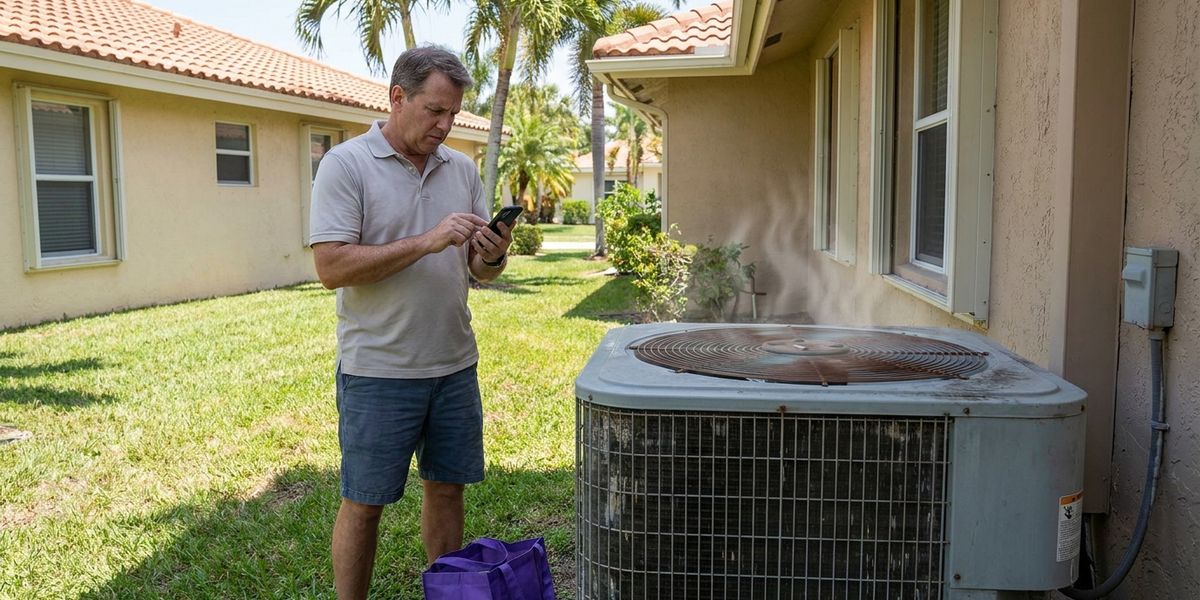
If your air conditioner keeps switching on and off every few minutes — never finishing a full cooling cycle — that's called short cycling, and it's more than an annoyance. Each start-up is the hardest, highest-draw moment for the system, so constant cycling wears out the compressor, spikes your FPL bill, and leaves your home humid and unevenly cooled. In Florida, where the AC runs nearly year-round, it's a problem worth fixing fast.
Here's what causes short cycling, what you can check yourself, and when to bring in a technician before it costs you a compressor.
What "Short Cycling" Actually Looks Like
A healthy AC in Florida summer runs in fairly long, steady cycles. Short cycling is when it:
- Turns on, runs 2–5 minutes, shuts off, then restarts soon after — repeatedly.
- Never quite reaches the thermostat setpoint.
- Leaves the house sticky and warm despite running constantly.
If that's what you're seeing, work through the causes below, easiest first.
The Most Common Causes of Short Cycling
1. Dirty Air Filter (start here)
A clogged filter chokes airflow, the system overheats or the coil freezes, and it shuts off prematurely — then restarts once it recovers. It's the cheapest, most common cause.
DIY check: Pull the filter. If you can't see light through it, replace it. In Florida, change filters every 30–60 days. When to call a pro: If a fresh filter doesn't restore normal cycles within a few hours.
2. Frozen Evaporator Coil
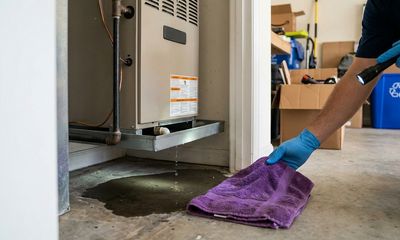
Restricted airflow or low refrigerant freezes the coil, and the system cuts out until it thaws — a classic short-cycling pattern. (It's also a common reason the AC stops cooling and leaks water.)
DIY check: Look for ice on the coil or refrigerant lines. Turn the system OFF, set fan to ON to thaw, replace the filter. When to call a pro: If it refreezes — that points to refrigerant or a deeper airflow issue.
3. An Oversized System
This one surprises people: an AC that's too big for the home cools the air too fast, hits the setpoint, and shuts off — before it can pull out humidity — then restarts minutes later. The house feels clammy and the unit cycles constantly. Oversizing is common in Florida when systems were replaced without a proper load calculation.
DIY check: None — but if short cycling has happened since a recent install, sizing is a prime suspect. When to call a pro: Yes. A proper load calculation and, sometimes, right-sized equipment is the real fix — see AC installation.
4. Low Refrigerant
Low refrigerant (always from a leak) makes the system struggle and trip its safety controls, cycling on and off — usually with warm air and rising bills.
DIY check: None that's safe or legal. When to call a pro: Always — we find and seal the leak, then recharge.
5. Thermostat Problems or Bad Placement
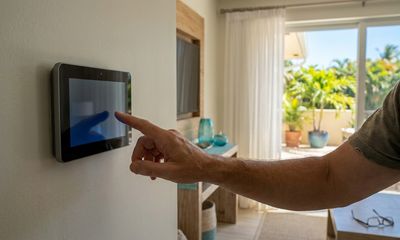
A thermostat in direct sun, near a vent, or failing can misread the temperature and cut cycles short. (More on this in why your thermostat isn't working.)
DIY check: Make sure the thermostat isn't in sun or near a heat source; replace its batteries. When to call a pro: If placement is fine but cycling continues.
6. Failing Capacitor or Compressor
A weak capacitor or an overheating compressor will trip the system off and on. Salt air on the coast accelerates capacitor failure.
DIY check: None — these are electrical/mechanical. When to call a pro: Promptly, before a cheap capacitor problem becomes a compressor replacement.
The South Florida Factor
- Humidity load: our systems have to remove huge amounts of moisture, so an oversized or struggling unit that short-cycles leaves homes noticeably clammy — comfort suffers even when the temperature reads fine.
- Oversizing is common here: quick equipment swaps without a load calc are a frequent culprit on the coast.
- Salt-air capacitor failures and storm surges add electrical causes that show up as cycling.
Why You Shouldn't Wait
Every short cycle is a hard start on the compressor — the most expensive part of your AC. Left alone, short cycling drives up your electric bill, wears the system out years early, and keeps your home humid. Fixing the cause (often a cheap one) protects a very expensive component.
When to Call Kyzar
Swap the filter and check the thermostat first. If cycling continues, it's refrigerant, sizing, or an electrical/mechanical fault that needs a technician. We dispatch same-day from two local offices:
- West Palm Beach & Palm Beach County: AC repair in West Palm Beach
- Port St. Lucie & the Treasure Coast: AC repair in Port St. Lucie
We diagnose the real cause, explain it in plain language, and fix it — and regular AC maintenance prevents most cycling problems before they start. Book online in 7 seconds or call today.
Frequently Asked Questions
Is short cycling bad for my AC?
Yes. Each start-up is the highest-stress moment for the compressor, so constant cycling wears it out years early, raises your energy bills, and leaves your home humid and unevenly cooled. Because the compressor is the most expensive part to replace, fixing short cycling early — often a cheap repair — protects a costly component.
How often should my AC cycle in Florida summer?
There's no single rule, but in peak Florida heat a healthy system runs in fairly long, steady cycles — often 10–20 minutes at a time — rather than flicking on and off every few minutes. Very short, frequent cycles (every 2–5 minutes) signal a problem worth diagnosing.
Can an oversized AC cause short cycling?
Absolutely — it's a leading cause. An oversized unit cools the air so fast it hits the setpoint and shuts off before removing humidity, then restarts minutes later. The home feels clammy despite constant cycling. The fix is a proper load calculation and correctly sized equipment, which is why sizing at installation matters so much.
Why does my AC turn on and off but the house stays warm or humid?
That combination often points to a frozen coil, low refrigerant, or an oversized system that can't dehumidify. The unit keeps cycling but never does its job. Start with the air filter, then have a technician check refrigerant and sizing — running it this way stresses the compressor.
How fast can you come out in West Palm Beach or Port St. Lucie?
Usually same day. We dispatch locally from our West Palm Beach and Port St. Lucie offices and can typically reach homes across Palm Beach County and the Treasure Coast within hours of your call.