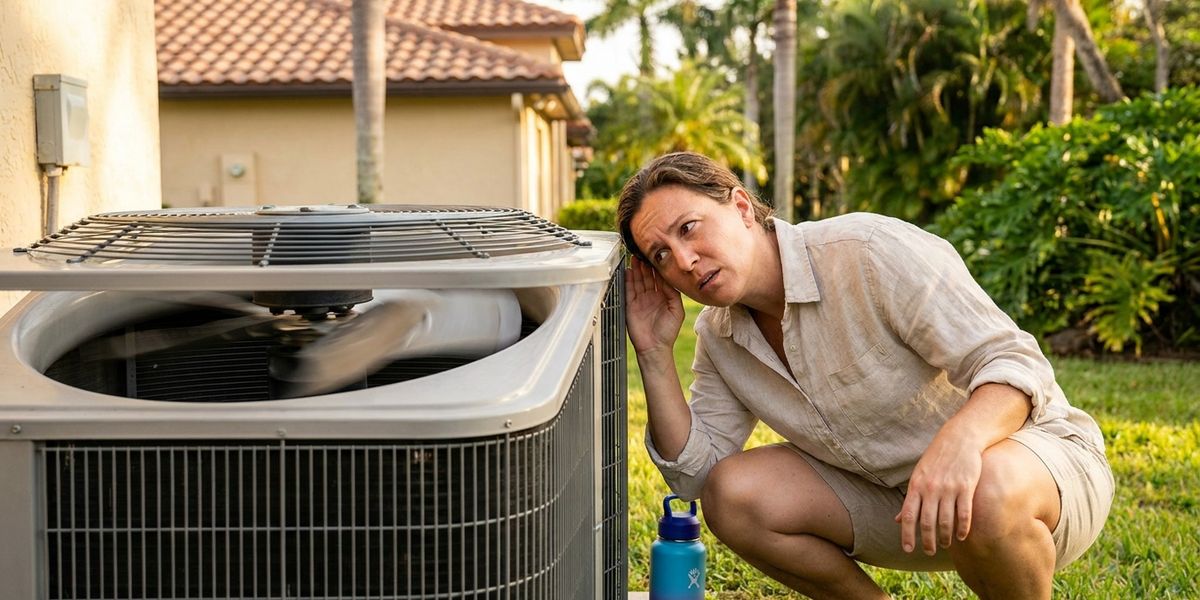
A well-running air conditioner has a steady, almost boring hum. So when it suddenly starts buzzing, rattling, screeching, or banging, your gut is right: something changed. The good news is that the type of noise is a remarkably good clue to what's wrong — and some causes are quick, inexpensive fixes when you catch them early. Others mean you should shut the system off before it does real damage.
Here's how to read the sound your AC is making, what you can safely check yourself, and when it's time to call a technician. This is what we actually listen for on service calls across West Palm Beach and the Treasure Coast every day.
First: Where Is the Noise Coming From?
Before anything else, figure out the source — it narrows the problem fast.
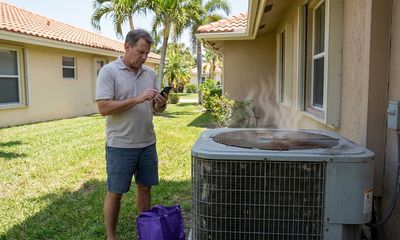
- Outdoor unit (the condenser): the big box outside. Most loud mechanical noises — buzzing, rattling, screeching — come from here.
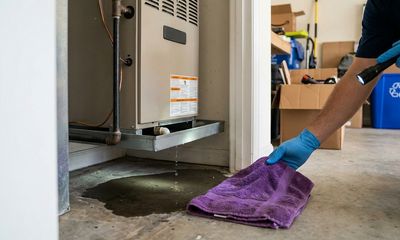
- Indoor unit (the air handler): usually in a closet, garage, or attic. Noises here point to the blower motor, fan, or ductwork.
- The vents/ducts: booming or whistling that moves through the house is often airflow or ductwork, not a broken part.
Now match the sound.
The 5 Most Common AC Noises (and What Each Means)
1. Loud Buzzing or Humming
A persistent electrical buzz — especially if the outdoor fan isn't spinning or the unit hums but won't start — usually points to a failing capacitor, a bad contactor, or loose electrical connections. On the coast, salt air corrodes these electrical components faster than almost anywhere else, so this is one of our most common calls.
DIY check: Look at the outdoor fan. If it's humming but not spinning (or you nudged it and it started), that's a classic capacitor symptom. Turn the system off. When to call a pro: Always for this one — capacitors hold a dangerous charge. The upside: it's usually a fast, affordable repair. See the warning signs in our guide to bad AC capacitor symptoms.
2. Rattling or Clanking
Rattling often means something is loose — fan blade, screws, a panel, or debris (palm fronds, gravel, even a lizard) that got into the condenser. Clanking is more serious: a loose or failing part knocking around inside.
DIY check: With the system off, look for obvious debris in the outdoor unit and clear it. Check that the access panels are screwed down tight. When to call a pro: If the rattle is internal or comes back after you've cleared debris — a loose blade or motor mount left alone can destroy the fan.
3. Screeching or Squealing
A high-pitched screech from the outdoor unit or air handler typically means a motor bearing is going (blower or fan motor) or, on older systems, a worn belt. It can also be high internal pressure in the compressor — which is a shut-it-off-now situation.
DIY check: None that's safe beyond noting where it's coming from. When to call a pro: Promptly. A seizing motor can fail completely and strand you on a 95-degree afternoon.
4. Clicking
Clicking when the system starts or stops is normal (relays). Constant or rapid clicking is not — it usually points to a failing relay, a control-board issue, or a thermostat problem.
DIY check: Replace the thermostat batteries and confirm it's set to COOL. If the clicking continues, it's electrical. When to call a pro: If a thermostat reset doesn't stop it. Persistent clicking with no start-up is often the same capacitor/contactor family of issues.
5. Banging or Loud Knocking
Banging from the outdoor unit is the one to take most seriously — it often signals a loose or failing compressor (the most expensive component) or a broken part striking the housing.
DIY check: Turn the system off. When to call a pro: Immediately. On an older system, a failing compressor is the moment for an honest repair-versus-replace conversation — which we'll walk through with real numbers.
The South Florida Factor
Two local realities make AC noises more common here:
- Salt-air corrosion. Homes near the Intracoastal and the coast — and all along the Treasure Coast — sit in salt air that eats away at electrical contacts and fan hardware, loosening and corroding the exact parts that start buzzing and rattling first.
- Storm debris and wildlife. Our afternoon storms blow palm fronds, sand, and debris into outdoor units, and lizards and frogs love a warm condenser cabinet — both classic sources of rattles and clanks.
This is also why a unit that ran quietly in spring can get noisy by mid-summer: heat, runtime, and storm season expose every weak part at once.
When to Shut It Off Immediately
Turn the system off and call a pro if you hear:
- Banging or knocking (possible compressor failure)
- Loud screeching (seizing motor or high pressure)
- Buzzing with a burning smell (electrical — turn it off at the breaker)
Running a system through these noises usually turns a moderate repair into a major one.
When to Call Kyzar
A few of these you can safely handle — clearing visible debris, tightening a panel, resetting the thermostat. But buzzing, screeching, clicking, and banging are electrical or mechanical faults that need a licensed tech. We run same-day diagnostics from two local offices:
- West Palm Beach & Palm Beach County: AC repair in West Palm Beach
- Port St. Lucie & the Treasure Coast: AC repair in Port St. Lucie
We pinpoint the noise, explain it in plain language, and give you honest options. If it's an emergency, our emergency AC repair team is on call. Book online in 7 seconds or call and we'll get a technician headed your way.
Frequently Asked Questions
Is it safe to run my AC if it's making noise?
It depends on the noise. A faint hum or occasional click is usually fine. But banging, loud screeching, or buzzing with a burning smell means you should turn the system off — at the breaker if you smell anything electrical — and call a technician. Running through those sounds can turn a small repair into a compressor or motor replacement.
Why is my outdoor AC unit so loud all of a sudden?
A sudden increase in outdoor-unit noise is most often a failing capacitor or contactor (buzzing/humming), loose hardware or storm debris (rattling), or a motor bearing wearing out (screeching). Salt air on the coast accelerates the electrical failures. Turn it off and have it checked before the part fails completely.
How much does it cost to fix a noisy AC?
It ranges widely. A loose panel or debris is minimal; a capacitor or contactor is typically an affordable repair; a motor or compressor is significantly more. The key is catching it early — a cheap capacitor fix ignored can cascade into a burned-out compressor. We give upfront pricing before any work starts.
Can a dirty filter make my AC noisy?
Indirectly, yes. A clogged filter restricts airflow, which can make the blower work harder (and louder) and even cause the coil to freeze — which then makes hissing or dripping sounds as it melts. Changing your filter every 30–60 days in Florida is the cheapest noise-prevention there is.
How fast can you come out in West Palm Beach or Port St. Lucie?
Usually same day. We dispatch locally from our West Palm Beach and Port St. Lucie offices, so we can typically reach homes across Palm Beach County and the Treasure Coast within hours — faster during peak summer when a loud AC often means a breakdown is close.