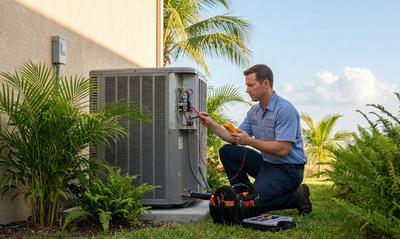
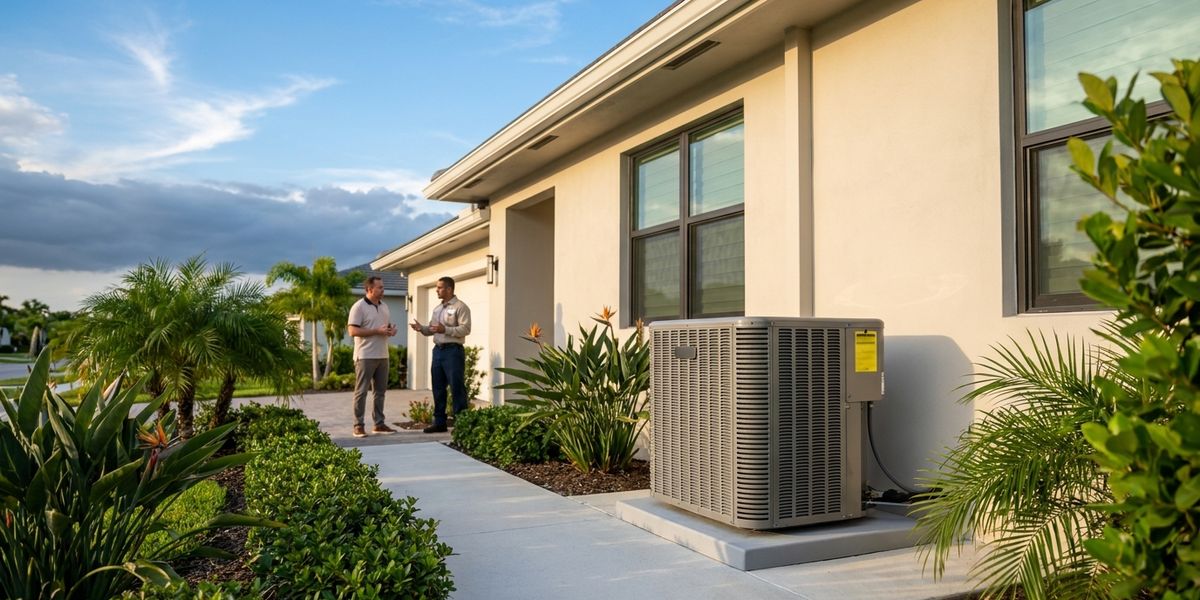
When you're shopping for a new air conditioner in West Palm Beach or Port St. Lucie, the SEER number is the first thing a salesperson points to, and it's where a lot of homeowners either overspend or under-buy. The pitch is usually "higher is better." The truth is more useful: in South Florida, there's a sweet spot, and going past it doesn't always pay you back.
Let's cut through it. Here's what SEER actually measures, the minimum Florida law requires, and how to figure out the right rating for your home and your cooling bills.
What SEER (and SEER2) Actually Mean
SEER stands for Seasonal Energy Efficiency Ratio. It's the cooling output of a system over a season divided by the electricity it uses, expressed as a number. Higher SEER means the unit produces more cooling per watt, so a higher-rated system uses less power to cool the same house.
As of 2023, the industry switched to SEER2, an updated testing standard that measures efficiency under more realistic conditions (higher static pressure in the ductwork, closer to how systems actually run in a real home). A SEER2 number runs slightly lower than the old SEER figure for the same unit, roughly 4 to 5 percent, so don't panic if today's ratings look a touch smaller than what you remember. It's just a stricter, more honest test.
Because we're in the hottest climate zone, SEER2 is the standard that matters for Florida. When you compare quotes, make sure you're comparing SEER2 to SEER2, not mixing old and new numbers.
The Florida Minimum
The U.S. is split into efficiency regions, and Florida sits in the Southeast zone, which has the toughest minimums in the country because we cool so much. For most residential split systems in Florida, the federal minimum is 14.3 SEER2 (equivalent to the old 15 SEER). You legally cannot install anything below that here.
That minimum is a floor, not a recommendation. A 14.3 SEER2 unit will keep your house cold, but given how many hours it runs each year, the efficiency you choose above that floor has a real effect on your monthly bill.
The South Florida Sweet Spot
Here's where the long cooling season works in your favor. Because your AC runs so many hours a year down here, every step up in efficiency saves you more than it would in a milder climate. The payback on efficiency is genuinely better in West Palm Beach than in, say, Atlanta.
For most South Florida homes, the sweet spot lands in the 16 to 18 SEER2 range. At that level you get a meaningful drop in electricity use over the minimum, the equipment is reliable and widely serviceable, and the price premium pays itself back over the life of the system through lower bills. Many homeowners in this range also get variable-speed or two-stage systems, which handle our humidity better by running longer at lower speeds and pulling more moisture out of the air. In a humid climate, comfort isn't just temperature, it's how the air feels, and better dehumidification is a real quality-of-life upgrade.
When Higher SEER Pays Off, and When It Doesn't
The ultra-high-efficiency systems (20+ SEER2) are impressive, but the honest answer on whether they're worth it depends on your situation.
Higher SEER usually pays off when:
- You run your AC constantly and keep the house cold year-round
- You're staying in the home long enough to recoup the premium (typically 8+ years)
- Your electric bills are already high and you want to cut them
- You want the superior humidity control that top variable-speed systems provide
Higher SEER often doesn't pay off when:
- You're near retirement or planning to sell within a few years
- The upfront premium is several thousand dollars for a few points of efficiency
- Your home has other bigger issues (leaky ducts, poor insulation) that would eat the savings
The math matters. A jump from 14.3 to 16 SEER2 usually returns your money quickly here. A jump from 18 to 22 SEER2 can take a decade or more to break even, and by then the unit may be nearing the end of its life. If you're weighing a big spend, it's worth reading our breakdown of repair versus replace costs and how long AC units last on the Treasure Coast to frame the decision realistically.
Why Right-Sizing Beats Max SEER Every Time
Here's the thing most SEER conversations miss: the highest efficiency rating in the world won't help you if the system is the wrong size for your house.
An oversized AC (too many tons for the square footage) cools the air fast, hits the thermostat setpoint, and shuts off before it has run long enough to remove humidity. In muggy South Florida, that means a house that feels cold and clammy at the same time, plus constant on-off cycling that wears the equipment out early. That short-cycling pattern is a classic symptom, and we explain it in why your AC is short cycling.
An undersized unit runs nonstop and never quite catches up on the hottest days. Neither problem is fixed by a higher SEER number.
The right approach is a proper load calculation (a Manual J) that accounts for your home's square footage, insulation, window exposure, and orientation. Get the sizing right first, then choose an efficiency level that fits your budget and how long you'll be in the home. That's the order that actually saves money. Our AC installation team does this calculation on every quote rather than just matching whatever was there before.
Frequently Asked Questions
What SEER rating do I need in Florida?
The legal minimum in Florida is 14.3 SEER2, but the sweet spot for most South Florida homes is 16 to 18 SEER2. That range gives you meaningful energy savings given our long cooling season without the steep premium of ultra-high-efficiency units that take a decade to pay back.
What is SEER2 and how is it different from SEER?
SEER2 is the updated efficiency testing standard adopted in 2023. It measures performance under more realistic conditions, so the numbers run about 4 to 5 percent lower than old SEER ratings for the same unit. When comparing quotes in Florida, always compare SEER2 to SEER2.
Is a higher SEER rating worth it in Florida?
Often, but not always. Because we cool nearly year-round, efficiency upgrades pay back faster here than in cooler states. A jump from the minimum to 16 to 18 SEER2 usually pays for itself. Going to 20+ SEER2 can take a decade or more to break even, so it depends on how long you'll stay in the home.
Does a higher SEER unit cool better in humidity?
Not directly, but many higher-SEER systems use variable-speed or two-stage compressors that run longer at lower speeds, which removes more humidity. In South Florida, that dehumidification is a bigger comfort win than the temperature number alone.
Is bigger (higher tonnage) always better for a hot climate?
No. An oversized AC cools too fast, shuts off before removing humidity, and short-cycles itself into early failure. Proper sizing through a load calculation matters more than maxing out either tonnage or SEER.
Not sure which rating fits your home and budget? Kyzar Air Conditioning does a proper load calculation on every install and offers same-day service from our West Palm Beach and Port St. Lucie offices, serving WPB, Tradition, and the entire Treasure Coast. Schedule a consultation and we'll help you land on the right system, not just the most expensive one.