You flip the thermostat to cool, wait for that familiar hum from the air handler, and get nothing. In West Palm Beach or Port St. Lucie, a dead AC isn't a minor annoyance. When it's 94 degrees with 80 percent humidity and an afternoon storm rolling in off the coast, the house heats up fast.
The good news: a fair number of "AC won't turn on" calls come down to something you can check yourself in ten minutes. The rest need a technician. Here's how to tell the difference without guessing.
Start With the Thermostat
More often than you'd think, the thermostat is the whole story. Confirm it's actually set to Cool (not Off, not Heat, not Auto-with-a-high-setpoint) and that the target temperature is a few degrees below the room reading. If the fan works on "On" but the compressor never kicks in, that's a clue the problem is downstream, not the stat.
Then check the batteries. A lot of modern thermostats run on two AAs, and when they die, the screen can look normal for a while before going blank or unresponsive. Swap them even if the display seems fine. If you've got a smart thermostat that's wired for power (a C-wire), a blank screen instead points to a tripped breaker or a lost 24-volt signal from the air handler.
This is the classic thermostat on but AC not working scenario, and it splits two ways: either the stat isn't sending the signal, or the equipment isn't receiving it.
Check the Breakers and the Disconnect
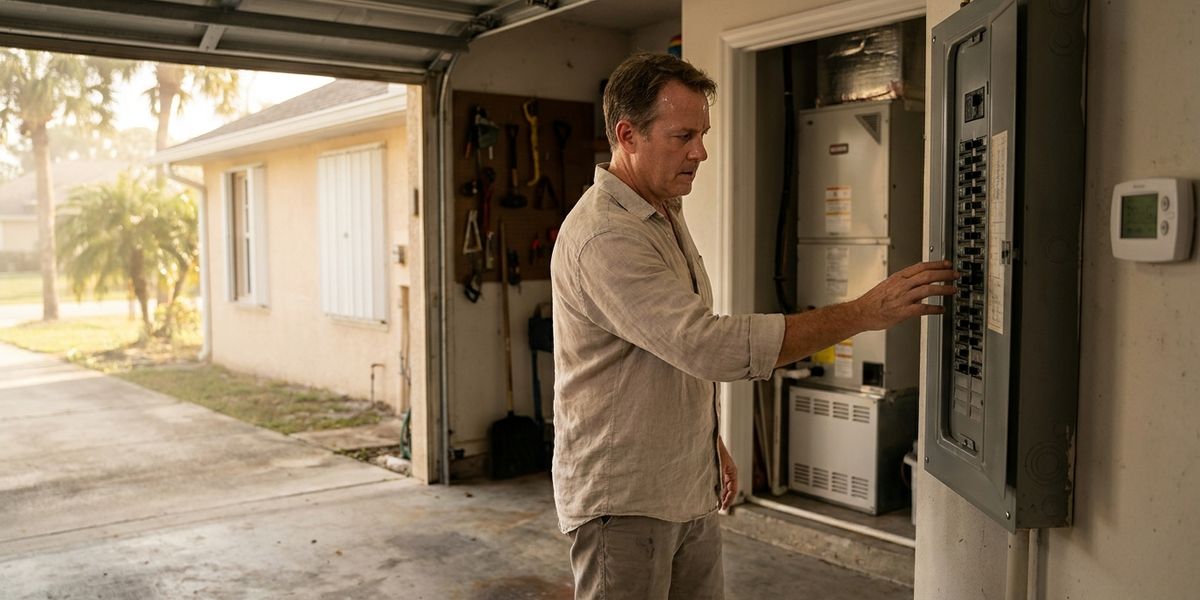
A central AC system usually has two breakers: one for the indoor air handler and one for the outdoor condenser. Open your electrical panel and look for a breaker that's sitting halfway or flipped to Off. Reset it firmly to Off, then back to On.
One important caveat. If a breaker trips again right after you reset it, stop. That's the breaker doing its job, protecting you from a short or an overloaded circuit. Repeatedly forcing it can turn a repair into a fire hazard. Call a pro at that point.
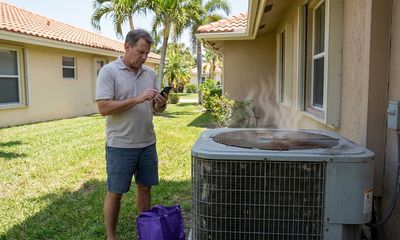
There's also a disconnect box on the wall next to your outdoor unit, usually a gray box with a pull-out block. During service, hurricane prep, or a landscaping mishap, that block can get pulled and not fully reseated. Pop the cover and make sure it's pushed all the way in. It's a two-second check that solves more problems than people expect down here, where units get shut off before every storm.
The Florida Culprit: A Full Condensate Drain Pan
Here's the one that catches almost everyone in South Florida. Your AC pulls a staggering amount of moisture out of the air, and all that water drains through a PVC line. Over months of near year-round runtime, that line clogs with algae and slime.
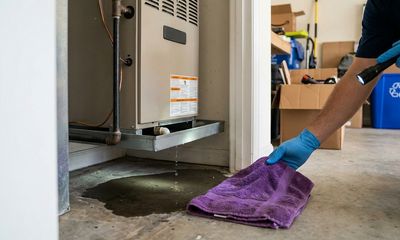
When it clogs, water backs up into the drain pan. To prevent that water from overflowing onto your ceiling or air handler, most systems have a condensate float switch (a safety cutoff) that shuts the whole system down when the pan fills. So the AC "won't turn on," but nothing is actually broken. It's protecting your home.
Look at the air handler (often in a closet, garage, or attic). If you see standing water in the drain pan or dripping, that's your answer. Some homeowners clear the line by attaching a wet/dry vac to the outdoor end of the drain, or flushing it with a cup of distilled vinegar at the access tee. If you're not comfortable with that, or the water keeps coming back, it's a service call. A clogged drain that overflows is one of the most common water-damage claims in South Florida homes.
The Blown Fuse in the Air Handler
Many air handlers have a low-voltage fuse on the control board, typically a small 3- or 5-amp automotive-style fuse. A power surge (and we get plenty of those during storm season) can blow it. When it goes, the thermostat loses power and the system won't respond even though the breaker looks fine.
Spotting and replacing this fuse is doable, but it means opening the air handler and working near the control board. If you're not confident, don't force it. A blown fuse often blows for a reason, and a tech should confirm there isn't an underlying short.
Failed Capacitor or Contactor
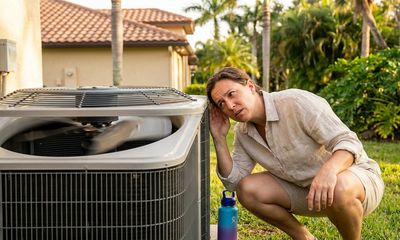
If your outdoor unit hums but won't start, or the fan tries to spin and stalls, suspect the run capacitor. The capacitor gives the motor the jolt it needs to start, and Florida heat plus constant runtime is brutal on them. A swollen or leaking capacitor is a top failure mode here. If you want to know what to watch for, our guide on bad AC capacitor symptoms in Florida walks through the warning signs.
The contactor is the electrical switch that lets the thermostat "close the circuit" to the compressor. Its contacts can pit, corrode (salt air, again), or get stuck. Both parts are inexpensive, but they carry high voltage and belong in a technician's hands. This is not a DIY fix.
DIY Checks vs. When to Call a Pro
Safe to try yourself:
- Set the thermostat to Cool, lower the setpoint, replace batteries
- Reset a tripped breaker once
- Reseat the outdoor disconnect
- Check the drain pan for standing water
Call a professional if:
- The breaker trips again immediately
- You see or smell burning near the equipment
- The outdoor unit hums but won't start (likely capacitor or contactor)
- You've cleared the obvious stuff and it's still dead
If your AC is off completely and the house is climbing past comfortable, don't wait it out in summer. Our emergency AC repair team runs same-day calls across both markets. And if the unit does turn on but just isn't getting cold, that's a different diagnostic path. See why your AC isn't cooling or, if it keeps starting and stopping, why your AC is short cycling.
Worth knowing too: if your system is aging, a no-start can be the first sign it's near the end. Our piece on how long AC units last on the Treasure Coast puts the timeline in perspective.
Frequently Asked Questions
Why won't my AC turn on but the thermostat is on?
The thermostat having power doesn't mean it's sending a cooling signal, or that the equipment can act on it. Check that it's set to Cool below room temperature, replace the batteries, then look at both breakers and the outdoor disconnect. A full condensate pan tripping the float switch is another very common Florida cause.
Can a clogged drain line really stop my AC from turning on?
Yes. When the drain line clogs and the pan fills, the condensate float switch cuts power to the system on purpose to prevent water damage. Clear the line and the AC comes back. It's one of the single most common reasons a South Florida system won't start.
Is it safe to keep resetting a breaker that trips?
No. If a breaker trips once, resetting it is fine. If it trips again immediately, it's warning you of a short or overload. Repeatedly forcing it risks damage and even fire. Turn it off and call a technician.
Why does my outdoor unit hum but not start?
That's the signature of a failed run capacitor or a stuck contactor. The motor is getting power but not the starting torque it needs. Both are affordable parts, but they carry high voltage and should be replaced by a pro.
My AC won't turn on after a storm. What happened?
Storm season brings power surges that can blow the low-voltage fuse on the air handler's control board or trip a breaker. Check the breakers and disconnect first. If those are fine and it's still dead, a surge may have taken out the fuse or a control component, which warrants a service visit.
Still stuck? Kyzar Air Conditioning runs same-day emergency service from our West Palm Beach and Port St. Lucie offices, so whether you're in WPB, Tradition, or anywhere across the Treasure Coast, we can get someone out fast. Book your visit and we'll have your home cooling again before the next afternoon storm.