
You open the FPL app in July and do a double take. The bill jumped a hundred dollars, maybe more, and nothing in your life changed. Same house, same habits, same thermostat. So what gives?
In South Florida, the honest answer is almost always your air conditioner, and not because it's broken. Cooling is the single biggest slice of a summer power bill down here, and small inefficiencies that you'd never notice in a mild climate get magnified when the system runs sixteen hours a day. Let's walk through what actually drives the number up, and which of those you can fix cheaply.
Your AC Is Doing Most of the Work
When it's 92 degrees with 80 percent humidity outside and your house is sitting at 76, your system is fighting a huge temperature and moisture gap all day long. Cooling can account for half or more of a Florida home's electric bill in the peak months. That's the baseline. Everything below either adds to it or claws some of it back.
The Cheap, Common Culprits
A Dirty Air Filter
This is the one almost everyone forgets. A clogged filter chokes airflow, so your system runs longer to reach the same temperature, and longer runtime is money. In our dust, pollen, and pet-hair conditions, filters load up faster than the packaging suggests. Check it monthly in summer and change it when it looks gray. It's the highest-return five minutes you'll spend all season.
Dirty Coils
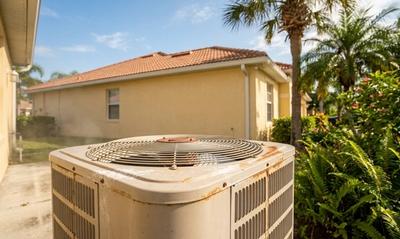
Your outdoor condenser coil dumps heat outside, but salt air, grass clippings, and grime build up on those fins and insulate them, so the system works harder for the same result. The indoor evaporator coil gets coated too. Dirty coils can quietly add 10 to 20 percent to your cooling cost. This is a core reason a yearly AC maintenance visit pays for itself.
Low Refrigerant
If your system is low on refrigerant, usually from a slow leak, it runs constantly and never quite satisfies the thermostat. Your bill climbs while your comfort drops. Refrigerant doesn't get "used up," so if you're low, you have a leak that needs finding, not just a top-off. If your air also feels warm, our guide on why your AC isn't cooling covers the warning signs.
Duct Leaks
A lot of South Florida homes run ductwork through hot attics. If those ducts leak, you're paying to cool the attic, some studies put duct losses at 20 to 30 percent in leaky systems. You can't see it on the bill directly, but you feel it in rooms that never get comfortable.
The Habits and Settings That Add Up
Thermostat Behavior
Every degree lower you set the thermostat costs you. Cranking it to 68 when you get home doesn't cool the house faster; it just runs the system flat out and can even freeze the coil. Setting a steady, sensible temperature and letting a programmable or smart thermostat ease it up while you're out saves real money. We break down the sweet spot in our companion post on the best AC temperature for Florida summer.
Short Cycling
If your system kicks on and off in quick bursts, it's short cycling, and that's both a comfort problem and an energy drain, because the startup surge is the most power-hungry moment of every cycle. Frequent restarts also wear out parts. Our guide on why your AC is short cycling explains the common causes and why it matters for your bill.
When the System Itself Is the Problem
An Aging, Low-SEER Unit
Efficiency is rated in SEER2, and older units are far thirstier than modern ones. A 10-SEER system from the mid-2000s can use noticeably more electricity than a modern 16-plus SEER2 unit doing the same job. If your unit is pushing 12 to 15 years, part of your high bill is simply old technology. Our piece on how long AC units last on the Treasure Coast helps you gauge where yours stands.
Skipped Maintenance
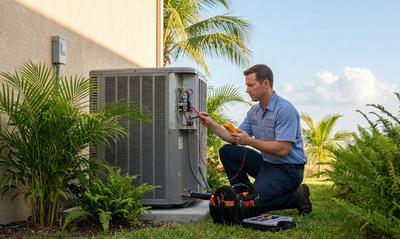
Systems drift out of tune. Refrigerant charge, airflow, electrical connections, and coil cleanliness all degrade over a year of hard South Florida runtime. A tune-up restores efficiency and catches the small leak or weak part before it becomes an emergency in August.
When Replacing Pays Off
Here's the honest math. If your unit is old, running constantly, and you're pouring money into repairs, a high-efficiency new AC installation can cut cooling costs meaningfully, and in our climate, where the system runs most of the year, those savings stack up faster than they would up north. But replacement is a big decision. If you're on the fence, our breakdown of the cost to repair versus replace an AC unit lays out how to decide without guessing. Sometimes a tune-up is all you need; sometimes the smart move is a new system. A straight answer beats a sales pitch.
Frequently Asked Questions
Why did my electric bill spike in summer if I didn't change anything?
The weather changed even if your habits didn't. Hotter, more humid days force your AC to run far longer, and any hidden inefficiency, a dirty filter, low refrigerant, dirty coils, gets amplified by all that extra runtime. The bill reflects the workload, not just your usage.
Does lowering my thermostat cool the house faster?
No. Setting it to 68 instead of 74 doesn't speed anything up; the system cools at the same rate either way. All a lower setpoint does is make it run longer and cost more. Pick a comfortable, steady temperature and leave it.
How much can maintenance really lower my bill?
A tune-up that cleans coils, checks refrigerant, and restores proper airflow can recover the 10 to 20 percent efficiency that a neglected system quietly loses. In a Florida summer, that's often the difference between the tune-up paying for itself and then some.
Is it worth replacing an old AC just to save energy?
If your unit is 12 to 15 years old and running constantly, a high-efficiency replacement can lower your monthly cooling cost enough to matter, especially with our long cooling season. Whether it pencils out depends on your repair history and unit age, which is exactly what a good assessment sorts out.
Could a high bill mean my AC is failing?
Sometimes, yes. A system running nonstop, short cycling, or struggling to hold temperature can signal low refrigerant, a weak component, or a system near the end of its life. A rising bill is often the first symptom before an outright breakdown.
If your summer bill has you worried, Kyzar Air Conditioning can pinpoint exactly where the waste is coming from. We offer same-day service from both our West Palm Beach and Port St. Lucie offices, so whether you're in WPB or up on the Treasure Coast, we can get someone out fast. Schedule a maintenance visit and let's get that bill back under control.